




If your skin suddenly feels tight, dry, rough, sensitive or unusually prone to redness, your skin barrier may be under stress. This can happen after over-exfoliating, using too many active ingredients, cleansing too aggressively, experiencing environmental stressors, or simply dealing with naturally dry or sensitive skin.
The good news is that supporting the skin barrier does not necessarily require a complicated skincare routine. In many cases, going back to gentle cleansing, regular moisturisation and daily sun protection can help reduce unnecessary irritation while allowing the skin to maintain its natural protective function.
At Dr HAACH, we believe that understanding your skin is an important part of responsible skincare. This article explains what the skin barrier does, what can disrupt it, common signs of barrier stress, and practical steps that may support healthier-looking skin.
Important: This article provides general skincare information and does not diagnose or treat skin conditions. Persistent redness, swelling, pain, severe itching, oozing, cracking or other significant symptoms should be assessed by a qualified healthcare professional.
What Is the Skin Barrier?
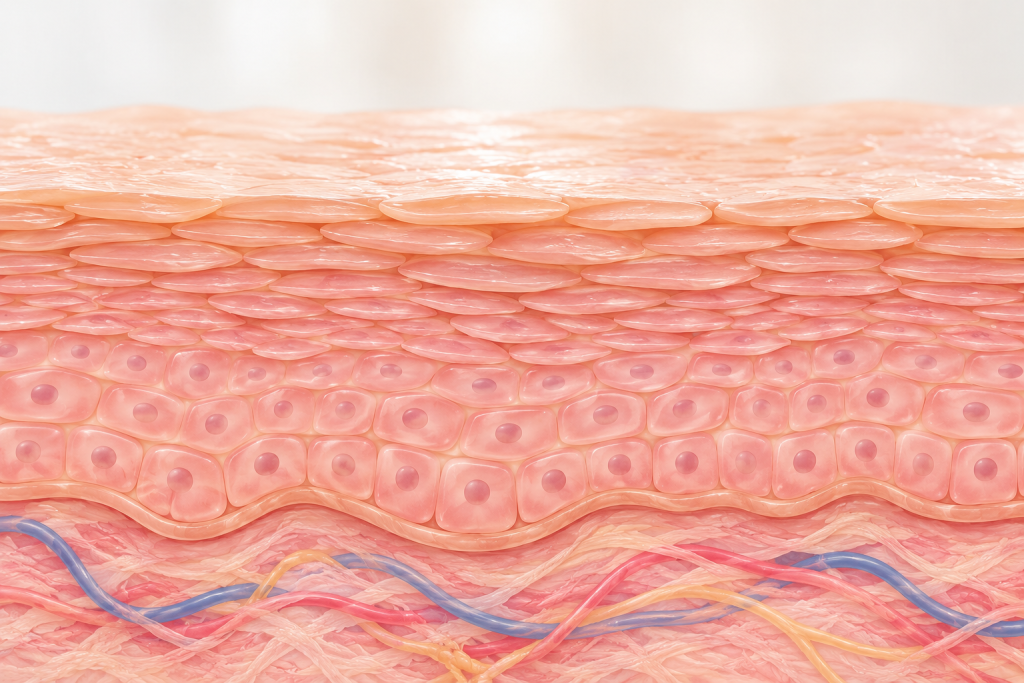
The skin barrier refers primarily to the outermost part of the epidermis, particularly the stratum corneum. It acts as an important protective interface between the body and the external environment.
One of its key functions is helping to limit excessive water loss from the skin while reducing the penetration of potentially irritating substances and allergens.
The barrier is not simply a layer of dead skin cells. Its structure depends on skin cells and intercellular lipids, including ceramides, cholesterol and fatty acids, which work together to maintain the organisation and permeability of the stratum corneum.
When the barrier is functioning properly, the skin is generally better able to retain moisture and protect itself from everyday environmental exposure.
When barrier function is disrupted, transepidermal water loss (TEWL) can increase. This can contribute to dryness, roughness and greater susceptibility to irritation.
What Does a Damaged Skin Barrier Look Like?
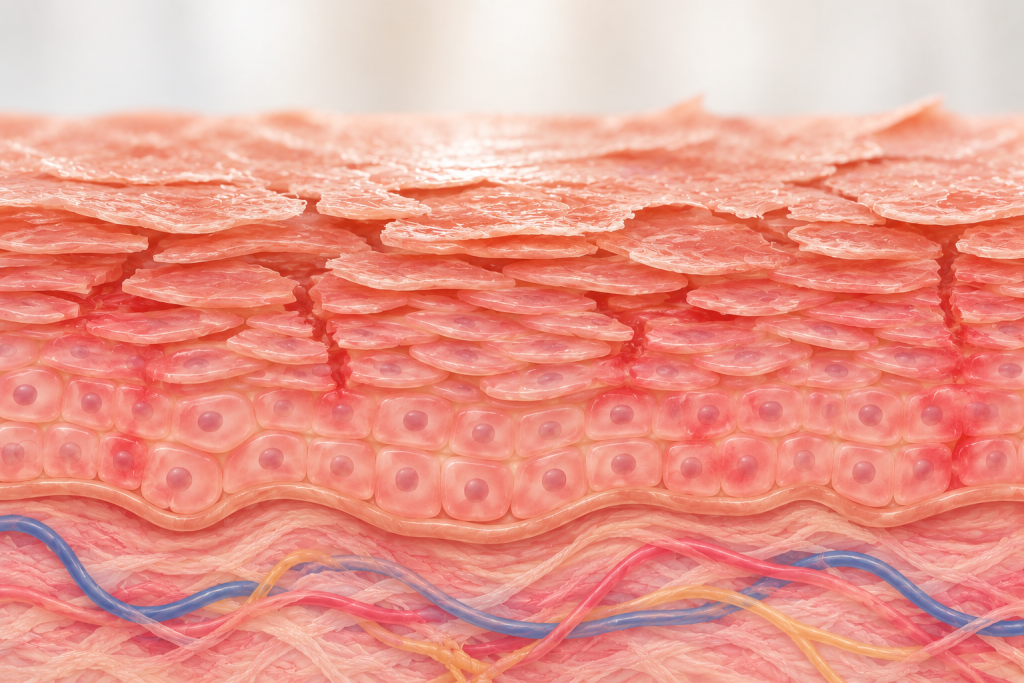
The term “damaged skin barrier” is commonly used in skincare, but it is not itself a medical diagnosis.
Barrier disruption can present differently from person to person. Some commonly reported signs include:
- Dry or flaky skin
- A tight or uncomfortable feeling after cleansing
- Rough or uneven skin texture
- Increased sensitivity to skincare products
- Stinging or burning when applying products that were previously tolerated
- Redness or irritation
- Skin that feels unusually dry despite moisturising
- Increased tendency towards irritation
These symptoms can have many possible causes, including dryness, irritation, allergic reactions and inflammatory skin conditions. Therefore, experiencing one or more of these signs does not automatically mean that your skin barrier is damaged.
For example, eczema can involve impaired skin barrier function, but eczema is a medical condition that may require professional assessment and treatment rather than skincare alone. Singapore-based dermatology guidance emphasises regular moisturisation and avoidance of irritants as important components of eczema care.
What Can Cause Skin Barrier Damage?
There is rarely one single cause. Skin barrier disruption can occur when the skin is exposed to repeated physical, chemical or environmental stress.
1. Over-Exfoliation
Exfoliating ingredients can be useful for specific skincare goals, but more is not necessarily better.
Using several exfoliating products at the same time, exfoliating too frequently, or continuing exfoliation when the skin is already irritated may increase discomfort and dryness.
Examples include frequent use of products containing:
- Alpha hydroxy acids (AHAs)
- Beta hydroxy acids (BHAs)
- Retinoids
- Physical scrubs
- Strong peeling products
This does not mean these ingredients are inherently harmful. Their suitability depends on the individual, formulation, concentration, frequency and condition of the skin.
2. Harsh Cleansing
Cleansing helps remove sweat, sebum, sunscreen, makeup and environmental impurities. However, aggressive cleansing can contribute to dryness and irritation.
Singapore dermatology guidance recommends gentle cleansing and avoiding harsh soaps or chemicals, particularly for people prone to eczema or sensitive skin.
For dry or sensitive skin, a mild, non-soap cleanser may be more appropriate than repeatedly using strong cleansing products.
3. Hot Showers
Long, hot showers can strip moisture from the skin and worsen dryness.
For people with sensitive or eczema-prone skin, Singapore General Hospital guidance recommends short showers with tepid or slightly warm water rather than hot water.
This can be particularly relevant in Singapore, where hot and humid weather may already expose the skin to sweat and frequent showering.
4. Dry or Air-Conditioned Environments
Air-conditioned environments can feel comfortable, but prolonged exposure to relatively dry indoor air may contribute to skin dryness in some people.
This can become more noticeable when moving repeatedly between Singapore’s humid outdoor environment and strongly air-conditioned offices, shopping centres or vehicles.
5. Fragrances and Other Irritants
Fragrances, certain detergents, strong soaps and other personal-care ingredients may irritate sensitive skin.
HealthXchange, which is supported by SingHealth, advises people prone to eczema to consider avoiding known irritants and using gentle products designed for dry or sensitive skin.
6. Skin Treatments or Procedures
Some aesthetic treatments intentionally stimulate or remove parts of the superficial skin layer. Temporary dryness, redness, peeling or sensitivity can occur depending on the procedure.
This is why appropriate preparation and aftercare matter.
At Dr HAACH, treatment suitability should be considered according to an individual’s skin condition, concerns and medical history rather than simply choosing a procedure based on a single symptom.
For example, our aesthetic treatments may involve different levels of skin stimulation, so appropriate professional assessment is important before undergoing treatment.
How Does Skin Barrier Repair Work?
The phrase skin barrier repair can make it sound as though the skin is something that can simply be “fixed” with one product.
In reality, supporting barrier recovery is usually about reducing unnecessary stress on the skin and maintaining hydration while the skin’s natural processes do their work.
Moisturisers can support the skin barrier through several mechanisms. Depending on their formulation, ingredients can:
- Attract water to the outer skin layer
- Reduce water loss
- Soften the stratum corneum
- Supplement or support the skin’s lipid environment
A 2023 review published in Dermatology and Therapy describes moisturisers as acting through different mechanisms across the physical, chemical, microbiological and immunological aspects of skin barrier function.
This is why skin barrier repair skincare is generally less about finding one “miracle” ingredient and more about choosing an appropriate routine and using it consistently.
7 Practical Steps for Skin Barrier Repair
If your skin has become unusually dry, tight or sensitive, the first step is often to simplify your routine and focus on the fundamentals: gentle cleansing, adequate hydration, moisturisation and daily sun protection.
For some people, this may be enough to help the skin feel more comfortable. For others, particularly those dealing with persistent dehydration, sensitivity or recurring skin concerns, a more tailored skincare approach may be worth considering.
1. Simplify Your Skincare Routine
Temporarily reduce unnecessary products if your skin is irritated.
A basic routine may include:
Morning
- Gentle cleansing, if needed
- Hydrating or moisturising skincare
- Broad-spectrum sunscreen
Evening
- Gentle cleanser
- Hydrating serum or essence
- Moisturiser
You do not necessarily need a complicated 10-step routine to support healthy-looking skin. A consistent routine that your skin tolerates well can be more useful than continually introducing new products.
At Dr HAACH, our Derma Cell Renewal Series takes a layered approach to daily skincare, with products designed around hydration, skin comfort, barrier support and overall skin quality. For example, the Derma Cell Renewal Collagen Hydrating Essence combines niacinamide and beta-glucan with hydrating and skin-conditioning ingredients, making it a consideration for skin that feels dehydrated, rough or less comfortable. (Dr HAACH)
The important consideration is not simply how many products are used, but whether the routine is appropriate for your skin and current concerns.
2. Choose a Suitable Moisturiser
Moisturiser is one of the most practical tools for supporting a compromised skin barrier.
Different moisturisers contain different combinations of:
- Humectants, which help attract and retain water
- Emollients, which help smooth and soften the skin
- Occlusives, which help reduce water loss from the skin
Ingredients commonly found in moisturising and hydrating formulations include glycerin, hyaluronic acid, petrolatum, shea butter and ceramides.
Ceramides are particularly relevant because they are naturally occurring lipids within the stratum corneum. Research has examined ceramide-containing formulations for their ability to improve hydration and support barrier function, including in people with atopic dermatitis.
At Dr HAACH, hydration and barrier support are also considered within our daily skincare range. The Derma Cell Renewal Collagen Hydrating Essence, for example, contains niacinamide and beta-glucan alongside other hydrating and conditioning ingredients. The Derma Cell Renewal Brightening Night Cream combines hyaluronic acid and niacinamide in an overnight formulation intended to support moisture and skin comfort. (Dr HAACH) (Dr HAACH)
These products are not intended to replace medical treatment for an underlying skin condition. Rather, they can form part of a considered skincare routine when their formulations are appropriate for the individual’s skin.
3. Apply Moisturiser While Skin Is Slightly Damp
Applying moisturiser shortly after washing can help retain moisture.
Singapore dermatology guidance recommends applying moisturiser soon after bathing or showering to help trap moisture within the skin.
You do not need to leave your face soaking wet. Gently pat the skin dry and apply your hydrating or moisturising product while the skin still feels slightly damp.
This is also why the order of your skincare routine matters. A lightweight hydrating product can be applied first, followed by a moisturiser where additional moisture retention is needed.
4. Avoid Aggressive Scrubbing
If your skin feels rough, it can be tempting to scrub harder or exfoliate more often.
However, roughness can sometimes be a sign that your skin needs less irritation rather than more exfoliation.
During periods of sensitivity, consider pausing:
- Physical facial scrubs
- Frequent peeling
- Strong exfoliating acids
- Multiple exfoliating products used together
This is particularly important when choosing skincare from a range that contains active ingredients. For example, the Derma Cell Renewal Activating Essence Base contains salicylic acid to support surface renewal, alongside niacinamide and other ingredients. While it is formulated for daily skincare and is indicated by Dr HAACH for a range of skin types, including sensitive skin, it is still important to consider your skin’s current condition and tolerance before introducing exfoliating ingredients. (Dr HAACH)
If your skin is actively stinging, peeling or irritated, introducing more exfoliation may not be the priority. Once the skin has settled, active ingredients can be reconsidered according to your skin type, concerns and skincare goals.
5. Be Consistent With Sun Protection
UV exposure can contribute to skin damage and premature ageing, making sun protection an important part of maintaining overall skin health.
A broad-spectrum sunscreen with an appropriate SPF can be incorporated into your morning routine, particularly in Singapore where UV exposure can be significant throughout the year.
Singapore-based dermatology guidance also recommends regular broad-spectrum sunscreen use for people managing eczema and sensitive skin.
If sunscreen causes stinging, consider trying a different formulation rather than abandoning sun protection altogether.
For Dr HAACH skincare users, sunscreen remains an important final step in the morning routine, particularly when using products designed to address visible skin concerns.
6. Avoid Constantly Changing Products
Trying several new skincare products at once makes it difficult to identify which product is helping or irritating your skin.
Instead, introduce new products one at a time.
If you have sensitive skin, patch testing a new product on a small area before applying it more widely may also be useful. HealthXchange recommends patch testing for people with sensitive skin before introducing new skincare products.
This is also a reason why a skincare routine should be personalised rather than built entirely around trends. A product may be well formulated, but that does not necessarily mean every ingredient or combination is appropriate for every individual.
7. Give Your Skin Time
Skin barrier support is generally a process rather than an overnight transformation.
If irritation was caused by overuse of products or excessive exfoliation, removing the trigger and returning to a gentle routine may give the skin an opportunity to recover.
Avoid constantly adding new products because you are not seeing immediate changes.
For individuals whose skin continues to feel dehydrated, sensitive or uncomfortable despite a suitable home-care routine, professional advice may be helpful. At Dr HAACH, our doctors can assess the skin and discuss whether daily skincare alone is appropriate or whether a professional treatment may be considered.
For example, Skin HyBoosters are minimally invasive treatments that use formulations such as hyaluronic acid or polynucleotides to support skin hydration, texture and overall skin appearance. They are not a substitute for repairing an acute skin irritation or treating an underlying dermatological condition, and suitability should be determined following consultation with a doctor. (Dr HAACH)
The key is to match the approach to the condition of your skin. Sometimes, the most appropriate step is simply to simplify your routine and allow the skin to settle. In other situations, professional assessment may help identify what is contributing to persistent dryness, sensitivity or changes in skin quality.
What Ingredients Help Support the Skin Barrier?

Several skincare ingredients can help support the skin barrier by improving hydration, reducing moisture loss and helping maintain the skin’s protective function. Some of the more commonly used ingredients include ceramides, glycerin, hyaluronic acid and occlusive ingredients.
Ceramides
Ceramides are naturally occurring lipids found in the stratum corneum and form an important part of the lipid matrix between skin cells.
Research has found that appropriately formulated ceramide-containing moisturisers may help improve dry skin and support barrier function.
Glycerin
Glycerin is a humectant commonly used in moisturisers to help attract and retain water.
Hyaluronic Acid
Hyaluronic acid is a water-binding ingredient frequently used in hydrating skincare formulations.
It can help improve skin hydration, although hydration and barrier function are related but not identical concepts.
Petrolatum and Other Occlusives
Occlusive ingredients can form a protective layer over the skin surface and reduce water loss.
Petrolatum is one example of an occlusive ingredient commonly used for dry skin.
Natural Moisturising Factors
Natural moisturising factors, or NMFs, are naturally occurring water-attracting substances within the stratum corneum.
They include compounds such as amino acids, urea, lactate and other components that help maintain water content and normal skin function.
Skin Barrier Repair in Singapore: What Should You Consider?
Singapore’s climate creates a somewhat unique skincare environment.
The combination of heat, humidity, perspiration, air conditioning and strong UV exposure means that your skin may experience very different conditions throughout the same day.
Humidity Does Not Mean Your Skin Cannot Be Dry
It is possible to have oily or combination skin while experiencing dehydration or barrier-related dryness.
For example, someone may experience an oily T-zone but still feel tightness or sensitivity on the cheeks.
This is one reason why skin type and skin condition should not be treated as exactly the same thing.
Sweat Can Also Irritate Sensitive Skin
Sweat, friction and repeated cleansing can be problematic for some people with sensitive or eczema-prone skin.
If you exercise outdoors, shower several times a day or regularly wear makeup in Singapore’s heat, focus on gentle cleansing rather than repeatedly using aggressive cleansers.
Air Conditioning Can Contribute to Dryness
If you spend much of your day in air-conditioned environments, you may notice increased dryness or tightness.
A consistent moisturising routine can help support hydration, particularly if your skin is naturally dry.
Should You Stop All Active Skincare During Skin Barrier Repair?
Not necessarily.
The answer depends on the active ingredient, concentration, formulation and condition of your skin.
However, if your skin is currently stinging, burning, peeling or unusually irritated, temporarily simplifying your routine may be sensible.
Active ingredients such as retinoids and exfoliating acids can be useful for specific skincare concerns, but they may also cause irritation, especially when introduced too quickly or combined with other potentially irritating products.
If a product prescribed by a doctor is causing discomfort, do not simply stop or change the treatment without discussing it with the prescribing professional.
The goal is not to avoid active ingredients forever. Rather, it is to avoid unnecessarily overwhelming the skin.
Can You Have Acne and a Damaged Skin Barrier at the Same Time?
Yes.
Acne-prone skin can still become dry or irritated, particularly when using acne treatments.
Research and clinical guidance have recognised that acne treatments may contribute to dryness and irritation, and moisturisers can be useful as supportive skincare alongside acne treatment.
This is important because some people respond to dryness by using even stronger cleansers or exfoliants in an attempt to remove oil.
That can create a cycle of irritation.
If you are experiencing persistent or moderate-to-severe acne, skincare alone may not be enough. Professional assessment can help determine whether medical acne treatment is appropriate.
At Dr HAACH, we also provide information about acne and acne scar management, but the appropriate approach depends on factors such as whether acne is active, the type and depth of scarring, skin sensitivity and individual treatment considerations.
Should You Get an Aesthetic Treatment When Your Skin Barrier Is Irritated?
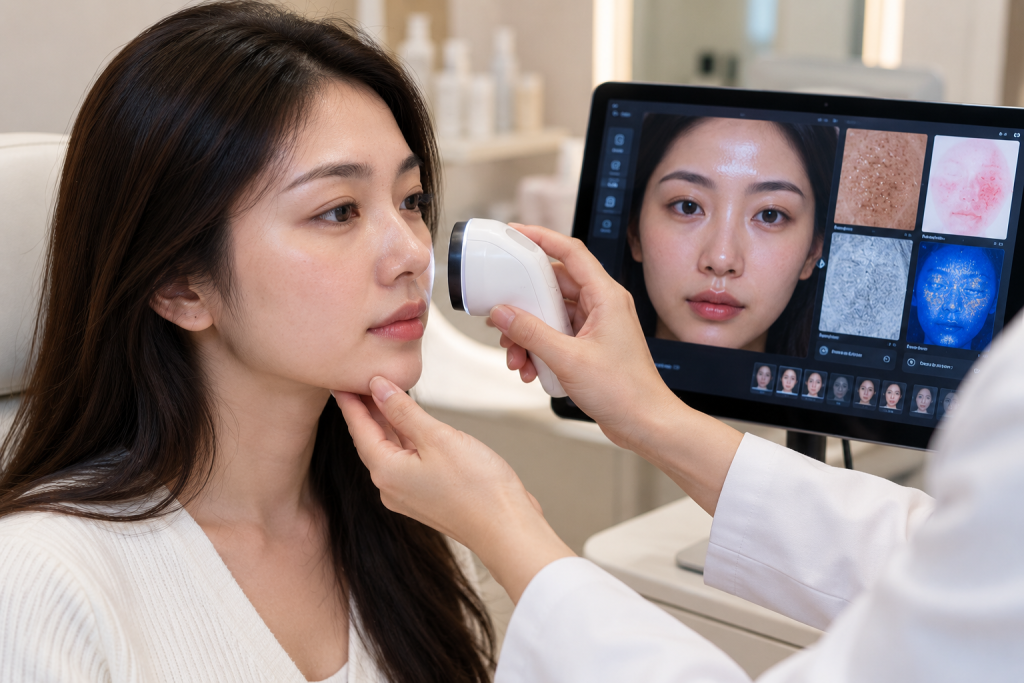
This depends on the condition of your skin and the procedure being considered.
If the skin is actively irritated, peeling, inflamed or unusually sensitive, it may be more appropriate to address the underlying irritation first rather than immediately pursuing additional procedures.
Different aesthetic treatments work in different ways. Some involve energy-based devices, exfoliation or injections, while others may focus more directly on hydration or skin appearance.
For this reason, treatment should be selected after an appropriate assessment rather than based solely on the phrase “skin barrier repair”.
At Dr HAACH, our approach is to consider the individual’s skin concerns and circumstances before discussing suitable aesthetic options. Our doctors can assess whether a treatment is appropriate and whether the timing is suitable.
For example, our Skin HyBooster treatments include hydration-focused options using hyaluronic acid, but these are minimally invasive medical aesthetic procedures rather than substitutes for basic daily skincare or treatment of an underlying dermatological condition.
When Should You See a Doctor?
Not every episode of dry or irritated skin requires medical attention.
However, professional assessment may be appropriate if you experience:
- Persistent or worsening redness
- Significant swelling
- Severe or persistent itching
- Pain or burning
- Cracked or bleeding skin
- Oozing or crusting
- Recurrent rashes
- Signs of possible infection
- Symptoms that do not improve despite simplifying your skincare routine
- A suspected allergic reaction
- Persistent acne, pigmentation or other skin concerns
These symptoms may have causes that cannot be addressed through moisturiser alone.
For example, eczema is a chronic inflammatory skin condition that may require prescription treatment in addition to regular skincare. Singapore dermatology resources emphasise that persistent or significant eczema should be appropriately assessed and managed.
Frequently Asked Questions About Skin Barrier Repair
How long does skin barrier repair take?
There is no universal recovery time.
It depends on what caused the irritation, how significant the disruption is, your underlying skin condition and whether the triggering factor has been removed.
A simple skincare routine, adequate moisturisation and avoidance of irritants may support recovery, but persistent symptoms should be assessed by a healthcare professional.
What is the best moisturiser for skin barrier repair?
There is no single moisturiser that is universally “best”.
Look for a formulation that your skin tolerates and that provides appropriate hydration and barrier support. Depending on your skin, ingredients such as ceramides, glycerin, hyaluronic acid, petrolatum and other emollient or occlusive ingredients may be useful.
For eczema or significant skin disease, a doctor or pharmacist can help you select an appropriate formulation.
Can I use hyaluronic acid when my skin barrier is damaged?
Hyaluronic acid is commonly used as a hydrating ingredient and may be suitable for many people.
However, the complete formulation matters. If a particular product causes burning or irritation, stop using it and reassess the product rather than assuming that every hyaluronic acid product will have the same effect.
Are ceramides good for skin barrier repair?
Ceramides are important components of the skin’s natural barrier, and research has found that ceramide-containing moisturisers may help improve hydration and barrier function in certain circumstances.
However, product formulation and individual tolerance still matter.
Should I exfoliate while repairing my skin barrier?
If your skin is currently irritated, reducing or temporarily stopping exfoliation may be appropriate.
Once the skin has settled, exfoliation can potentially be reintroduced depending on your skin type, goals and the products you are using.
Can oily skin have a damaged skin barrier?
Yes.
Oily skin refers primarily to sebum production, whereas skin barrier function relates to the skin’s protective and moisture-retaining properties.
It is possible to have oily skin that is also dehydrated or irritated.
Is dry skin the same as a damaged skin barrier?
Not necessarily.
Dry skin and impaired barrier function can overlap, but they are not identical concepts. Dryness can have many causes, and persistent redness, itching or irritation may indicate an underlying skin condition.
Can skincare permanently repair the skin barrier?
It is more accurate to think in terms of supporting and maintaining healthy barrier function rather than permanently repairing the skin with one product.
The skin is a living organ that continually renews itself, and its barrier function is influenced by genetics, age, environment, skincare practices and underlying conditions.
Can I have aesthetic treatments if my skin is sensitive?
Sensitive skin does not automatically mean that every aesthetic treatment is unsuitable.
However, treatment selection should take into account your current skin condition, sensitivity, medical history, treatment goals and the potential for irritation or downtime.
A consultation with a qualified aesthetic doctor can help determine whether a particular procedure is appropriate.
Conclusion: Supporting Your Skin Barrier Starts With the Basics
Skin barrier repair is often less complicated than skincare marketing makes it appear.
If your skin is feeling unusually dry, tight or sensitive, start by looking at the basics: use a gentle cleanser, moisturise consistently, avoid unnecessary irritation, be cautious with exfoliation and maintain daily sun protection.
Ingredients such as ceramides, glycerin, hyaluronic acid and occlusives may support hydration and barrier function, but the overall formulation and your individual skin response remain important.
Most importantly, do not assume that every episode of irritated skin is simply a “damaged skin barrier”. Persistent redness, itching, inflammation, pain or recurring rashes may require professional assessment.
At Dr HAACH, we take a personalised approach to aesthetic and skin concerns. If you are unsure whether your symptoms are related to skincare irritation, dryness, acne or another underlying skin concern, speaking with a qualified professional can help you understand the appropriate next steps.
Healthy-looking skin does not necessarily require more products. Often, it starts with understanding what your skin needs — and what it does not.
参考文献
- HealthXchange / SingHealth – Eczema Management
- SingHealth – Atopic Dermatitis
- HealthXchange / SingHealth – Dry Skin Management
- American Academy of Dermatology – Basic Skincare Guidance
- PubMed – The Skin Barrier and Moisturization: Function, Disruption, and Mechanisms of Repair
- PubMed – Role of Ceramides in Skin Barrier Function
- PubMed – Ceramide-containing Formulations and Skin Barrier Function