
How to Remove Dark Spots on the Face: Pigmentation, Acne Marks and Sunspots Explained
引言
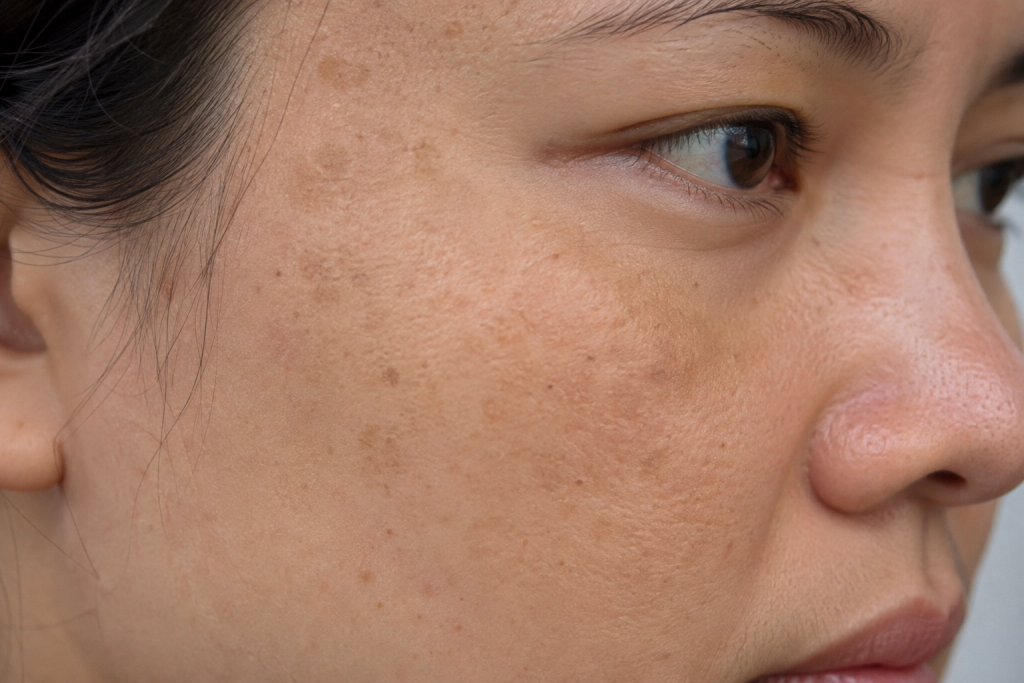
Dark spots on the face can have different causes, so there is no single pigmentation removal treatment that works for every type. A flat brown mark left after acne may be post-inflammatory hyperpigmentation (PIH), while sunspots, melasma and freckles have different characteristics and may require different approaches.
In Singapore, frequent Ultraviolet (UV) exposure is an important consideration because sunlight can contribute to pigmentation and worsen some pigmentary conditions. Acne-related inflammation, hormonal factors, skin irritation and genetics can also play a role.
If you are wondering how to remove dark spots on the face, the first step is not necessarily choosing a treatment. It is understanding what kind of pigmentation you may have and what may be contributing to it.
This guide explains the common causes of facial pigmentation, how acne marks differ from acne scars, why sun protection matters, and what pigmentation removal options may be considered in Singapore.
Important: This article provides general educational information and does not diagnose or treat individual skin conditions. Persistent, changing or unusual pigmentation should be assessed by an appropriately qualified medical professional.
What Is Facial Pigmentation?
Pigmentation refers broadly to the colour of the skin, which is influenced by melanin, the pigment produced by specialised cells called melanocytes.
When the skin produces or deposits more melanin in a particular area, the area can appear darker than the surrounding skin. This is commonly referred to as hyperpigmentation.
Common Forms of Facial Hyperpigmentation
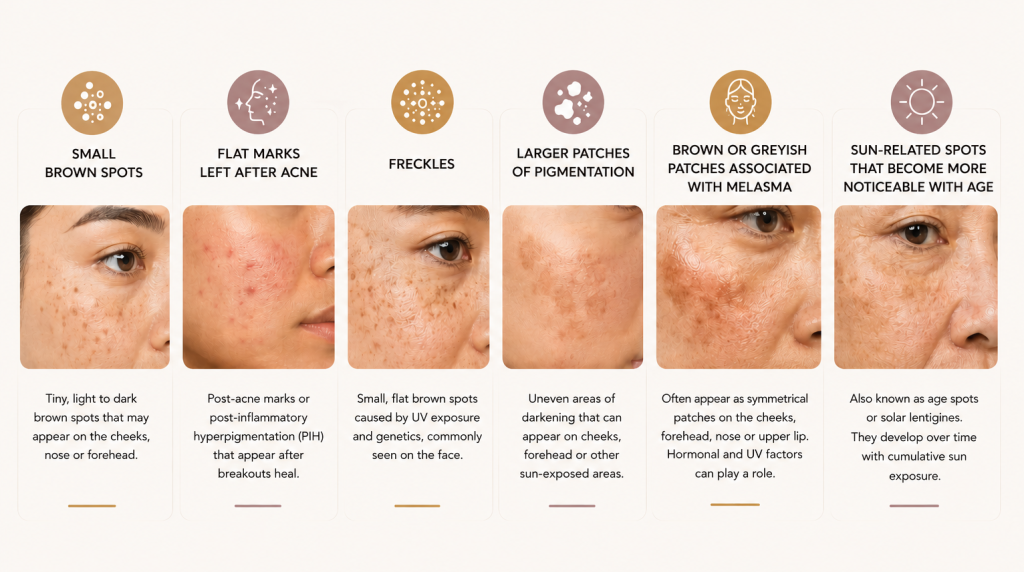
The appearance alone does not always tell you exactly what is causing the pigmentation. Different pigmentary conditions can overlap, and some skin lesions that look like harmless dark spots may require medical assessment.
What Causes Dark Spots on the Face?
There are several possible causes of facial pigmentation. Some of the most common include sun exposure, inflammation, hormonal influences and skin injury.
| Common cause | What it may look like | Common trigger / association | Important consideration |
| Post-inflammatory hyperpigmentation (PIH) | Flat brown, dark brown or greyish marks | Acne, irritation or inflammation | May gradually fade after the underlying inflammation settles |
| Sunspots / solar lentigines | Usually well-defined, flat brown spots | Cumulative UV exposure | Should be assessed if a spot is new or changing |
| 黄褐斑 | Larger, often symmetrical brown or greyish patches | UV/visible light, hormonal and genetic factors | Can recur and often requires ongoing management |
| 雀斑 | Small, flat pigmented spots | Sun exposure and genetic tendency | May become more noticeable with UV exposure |
| Other skin lesions | Variable | Various causes | Unusual or changing lesions should be medically assessed |
How to Tell the Difference Between Common Types of Dark Spots
Dark spots on the face can have different appearances and causes. Some appear as small, flat spots, while others may develop as larger patches of pigmentation. Marks left after acne can also look different from acne scars, which involve changes to the skin’s texture.
The appearance of pigmentation can provide useful clues, but it cannot reliably confirm what is causing it. If you are unsure about a persistent or unusual mark, a medical assessment can help determine whether it is pigmentation or another type of skin lesion.
However, appearance alone cannot reliably confirm a diagnosis.
| What you notice | What it may be associated with | What to know |
| Flat brown or darker marks where previous pimples appeared | Post-inflammatory hyperpigmentation (PIH) | Often develops after acne or other skin inflammation and may gradually fade |
| Small, flat brown spots that become more noticeable with sun exposure | Freckles or sun-related pigmentation | UV exposure can make pigmentation more noticeable |
| Larger, relatively symmetrical brown or greyish patches | 黄褐斑 | May be influenced by UV/visible light, hormonal changes and genetics |
| A change in skin texture after acne, such as depressions or raised areas | Acne scarring | Unlike pigmentation, acne scars involve structural changes to the skin |
| A new, irregular or changing dark spot | Requires assessment | Do not automatically assume that every dark spot is cosmetic pigmentation |
Acne Pigmentation and Post-Acne Marks
If a dark mark appears where a previous pimple or inflamed acne lesion was located, post-inflammatory hyperpigmentation may be one possible explanation. These marks are generally flat and represent a change in skin colour rather than a change in the structure of the skin.
This is different from an acne scar. Acne scars can involve changes to the skin’s texture, including depressed or raised areas, and may require a different treatment approach.
It is also possible to have both post-acne pigmentation and acne scarring at the same time. For example, a person may have a flat brown mark alongside an area of depressed skin texture from a previous acne lesion.
Why the Difference Matters
Knowing whether you are dealing primarily with pigmentation or a change in skin texture can help when discussing treatment options with a doctor. Treatments that are considered for pigmentation are not necessarily the same as those used for structural acne scarring.
However, a dark spot should not be self-diagnosed based on appearance alone. Persistent, changing or unusual marks should be assessed by an appropriately qualified medical professional.
How to Remove Dark Spots on the Face
Pigmentation can have different causes and appear in different forms, which means there is no single treatment that is suitable for everyone. The right approach depends on the type of pigmentation, its underlying cause, your skin characteristics, and any previous treatments.
| Approach | What it is generally used for | Key consideration |
| Sun protection | Helps reduce UV-related pigmentation and worsening of some pigmentary conditions | Needs to be consistent |
| Acne management | Helps reduce ongoing inflammation and the formation of new post-acne marks | Active acne may need treatment first |
| Topical skincare | Some evidence-based ingredients may help improve uneven pigmentation | Choice depends on skin condition and tolerance |
| Chemical peels | May be considered for selected pigmentation concerns | Appropriate strength and patient selection matter |
| Laser/light-based treatments | May be considered for selected pigmentary concerns | Suitability depends on diagnosis, skin type and treatment parameters |
| Medical assessment | Helps determine what type of pigmentation is present | Particularly important for persistent, changing or uncertain lesions |
Research has found that visible light can contribute to pigmentation, particularly in people with darker skin tones. Studies have also investigated the additional role of iron-oxide-containing photoprotection in melasma.
For people in Singapore, consistent daily sun protection is especially practical because UV exposure is not limited to a particular season.
Professional Pigmentation Treatments at Dr HAACH
When pigmentation persists or becomes difficult to manage with skincare and sun protection, professional pigmentation treatment may be an option. At Dr HAACH, a doctor can assess the pigmentation and recommend a suitable approach based on the individual’s skin condition and treatment needs. The clinic’s Pro Laser (Glow Pro Laser) is a non-invasive Q-switched laser treatment used for concerns such as pigmentation, uneven skin tone and post-acne marks. Different laser and aesthetic approaches may be considered depending on the skin concern, pigmentation characteristics and individual treatment needs.
| Pro Laser (Glow Pro Laser) | Fractional Laser | |
| General approach | Q-switched laser treatment | Skin-resurfacing laser treatment |
| Common concerns | Pigmentation, uneven skin tone, post-acne marks | Uneven texture, pigmentation, fine lines |
| Skin texture | May support overall skin renewal | More focused on resurfacing and texture |
| 停机时间 | Depends on individual treatment | Slight redness and sensitivity may occur |
| Treatment selection | Depends on pigmentation, skin characteristics and treatment goals | Depends on skin concern, skin characteristics and treatment goals |
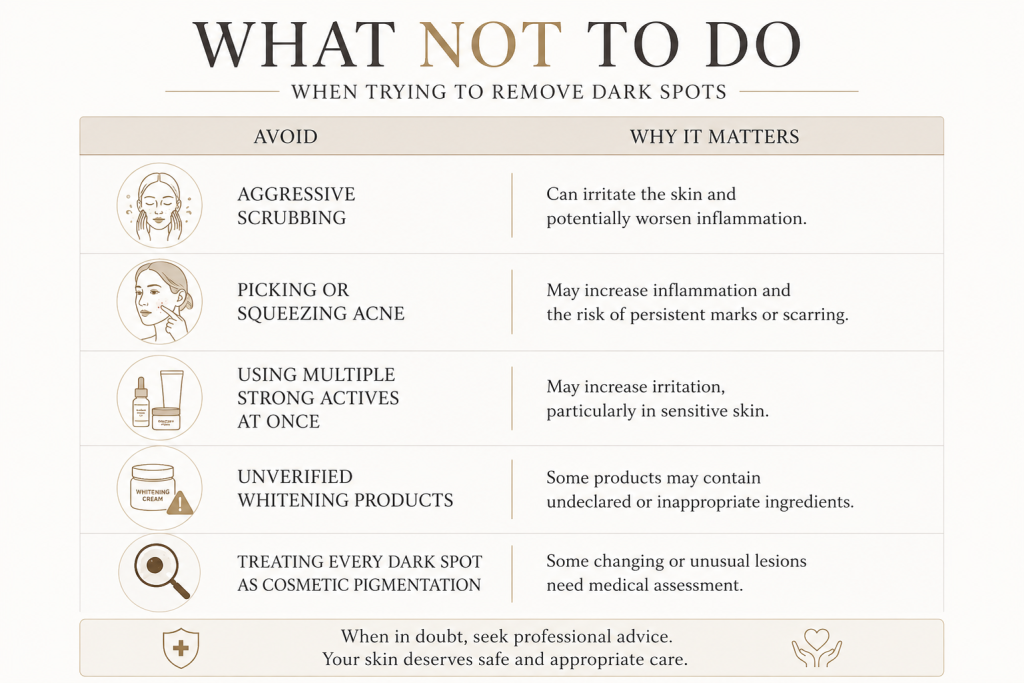
What Not to Do When Trying to Remove Dark Spots
When pigmentation is frustrating, it can be tempting to use increasingly aggressive products or home remedies.
This can sometimes make matters worse.
When Should You See a Doctor About Facial Pigmentation?
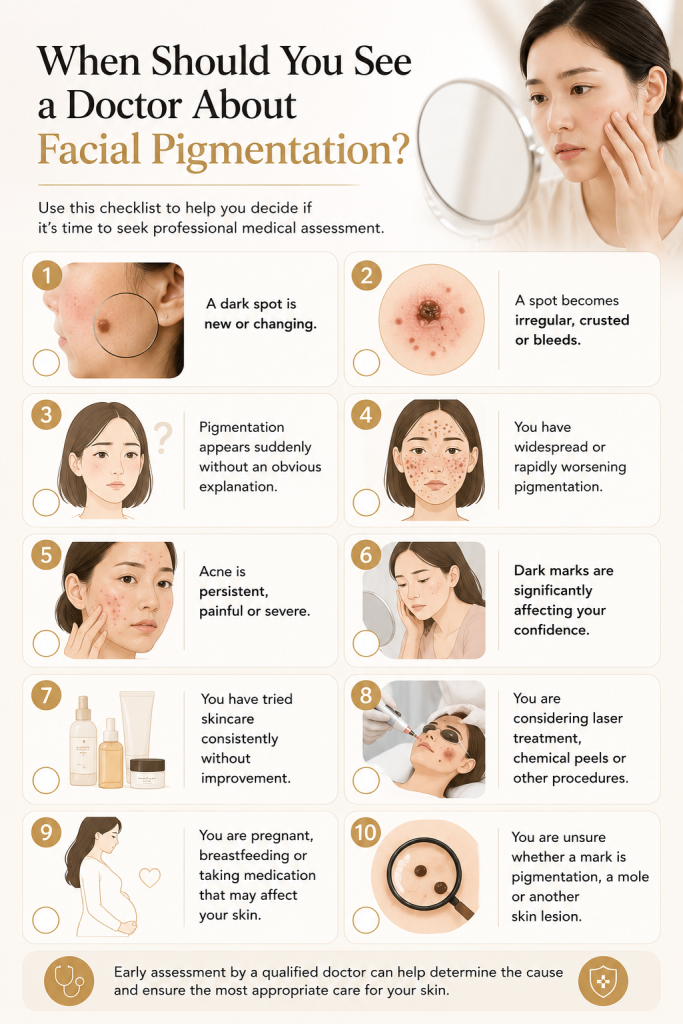
A doctor can determine whether the concern is primarily cosmetic pigmentation or whether another skin condition needs to be considered.
预约咨询
Frequently Asked Questions About Pigmentation Removal
Some dark spots, particularly post-inflammatory hyperpigmentation after acne or irritation, can gradually fade without treatment. However, fading can take months or longer, and deeper pigmentation may persist considerably longer.
Pigmentation is primarily a change in skin colour, while an acne scar can involve a structural change in skin texture, such as a depression or raised area.
A flat brown mark left after acne is more consistent with post-inflammatory hyperpigmentation than a conventional acne scar, although both can occur together.
Pigmentation removal generally refers to reducing the appearance of unwanted areas of excess pigmentation or uneven skin tone. It should not be interpreted as changing someone’s natural skin colour.
Be cautious of products or services promising dramatic skin whitening within a very short period, particularly where the ingredients or claims are unclear. HSA has warned consumers about products making exaggerated whitening claims and products containing undeclared potent ingredients.
Yes. Sun protection is an important part of managing and preventing worsening of many pigmentation concerns.
For melasma and hyperpigmentation, visible light may also be relevant, particularly in darker skin tones. Tinted sunscreens containing iron oxide may provide additional visible-light protection.
Scrubbing is not a recommended way to remove PIH.
Aggressive physical exfoliation can irritate the skin and potentially worsen inflammation. A more appropriate approach is to control active acne, protect the skin from UV exposure and use evidence-based skincare or professional treatment when appropriate.
Pigmentation treatment may require more than one session, depending on the individual’s skin condition and treatment response. Factors such as the type of pigmentation, its depth, the technology used and the overall treatment plan can all influence the number of sessions recommended. Dr HAACH’s Pro Laser treatment, for example, may involve multiple sessions depending on the individual’s condition.
The appropriate treatment schedule will therefore vary from person to person and should be determined following an individual assessment.
Laser treatment can improve the appearance of selected pigmentary concerns, but permanent clearance should not be assumed.
Some conditions, particularly melasma, can recur even after successful treatment. Ongoing sun protection and management of contributing factors remain important.
Laser treatment can be used in people with Asian skin, but treatment parameters and patient selection matter.
People with more pigmented skin may have a greater tendency to develop post-inflammatory hyperpigmentation after skin procedures. The suitability of a particular laser should therefore be assessed by an appropriately qualified medical professional.
There is no universal number of sessions.
The number depends on the pigmentation being treated, the technology used, individual skin response and the treatment plan.
For example, Dr HAACH’s published information states that its Pro Laser treatment may involve multiple sessions depending on the individual’s condition.
This should not be interpreted as a guaranteed treatment schedule or outcome.
Some pigmentation changes associated with pregnancy can improve after delivery, but treatment options may be restricted during pregnancy.
HealthHub advises pregnant women with skin problems to consult a doctor and avoid self-medicating because some treatments or medications may not be suitable during pregnancy.
If you are pregnant or breastfeeding, tell your doctor before using pigmentation treatments or undergoing procedures.
Conclusion: Pigmentation Removal Starts With Knowing What You Are Treating
Dark spots on the face can look similar but have very different causes. A brown mark left after acne may be post-inflammatory hyperpigmentation, while a clearly defined spot after years of sun exposure may be a solar lentigo. Larger, symmetrical patches may be associated with melasma, while other unusual lesions may require medical assessment before any cosmetic treatment is considered.
Effective pigmentation removal is therefore not simply about choosing the strongest cream, peel or laser. It starts with understanding the likely cause, protecting the skin from further UV exposure, managing active inflammation and considering an appropriate treatment based on the individual’s skin and pigmentation.
For people in Singapore, consistent sun protection remains an important part of pigmentation management. If pigmentation persists, repeatedly returns or is difficult to identify, consider seeking advice from a qualified medical professional rather than experimenting with increasingly aggressive treatments. For those considering professional options, Dr HAACH provides medical aesthetic consultations and lists pigmentation-focused laser treatments among its services. Treatment suitability and expected outcomes should be discussed with the clinic’s medical team based on the individual’s skin condition.
Key Takeaways
Dark spots can have different causes and should not automatically be treated the same way.
Post-acne pigmentation is different from structural acne scarring.
Consistent sun protection is an important part of pigmentation management.
Persistent, changing or unusual lesions should be professionally assessed.
Laser and other procedures should be selected according to the individual’s pigmentation and skin characteristics.
Medical disclaimer:
This article is for general educational purposes only and is not a substitute for medical consultation, diagnosis or personalised treatment advice. Individual results and suitability for any aesthetic procedure vary. If you have a new, changing or unusual skin lesion, seek medical assessment.