


If you find yourself asking, “Why do I keep getting acne?”, you are not alone. Acne can continue well beyond the teenage years, disappear for a period and return unexpectedly, or repeatedly appear in the same areas of the face.
Recurring breakouts can be frustrating, particularly when you feel that you are already cleansing regularly and using skincare products designed for acne-prone skin. However, acne is rarely caused by just one factor. Hormonal changes, excess sebum, clogged pores, inflammation, genetics, stress, skincare and haircare products, friction and certain medications can all contribute to recurring breakouts.
For people looking for Acne Treatment Singapore, understanding why breakouts keep returning is an important first step. Treating the visible pimple without considering the factors contributing to recurring acne may not address the underlying issue.
At DRHAACH, we believe acne concerns should be approached according to the individual’s skin condition, the type of acne present and their overall skin history. This article explains some of the common reasons acne keeps coming back, what you can do at home and when professional assessment may be appropriate.
What Causes Acne in the First Place?
Acne develops around the hair follicles and sebaceous glands. Several processes can contribute to acne, including excess sebum production, accumulation of dead skin cells, changes within the hair follicle and inflammation.
Singapore’s HealthHub identifies several factors that may contribute to acne, including hormonal changes, certain cosmetic products, some medications, stress, friction, smoking, diet and picking or squeezing acne.
SingHealth similarly describes acne as involving several contributing processes, including hormonal stimulation, abnormal shedding of skin cells, bacteria associated with acne and inflammation.
This is why recurring acne should not automatically be attributed to “dirty skin” or poor hygiene.
Why does one pimple disappear while another appears?
Acne is not simply a single spot that needs to be removed.
Even when an individual pimple settles, the factors that contribute to acne formation may still be present. For example, pores may continue to become clogged, sebum production may remain elevated, hormonal fluctuations may continue, or inflammation may persist.
As a result, one breakout can improve while another develops elsewhere.
This is one reason why acne management generally focuses not only on existing spots but also on preventing new breakouts from developing.
1. Hormonal Changes May Be Contributing to Your Breakouts
Hormonal fluctuations are one of the most common reasons acne can become recurrent, particularly in adults.
Hormones called androgens can stimulate the sebaceous glands to produce more sebum. Increased oil production can contribute to clogged follicles and acne.
For some women, breakouts may become more noticeable around their menstrual cycle. Hormonal changes associated with pregnancy, stopping or starting certain contraceptives, perimenopause and menopause can also influence acne.
What does hormonal acne look like?
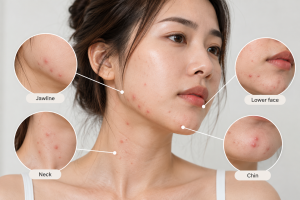
Hormonal influences can sometimes be suspected when acne repeatedly appears around the:
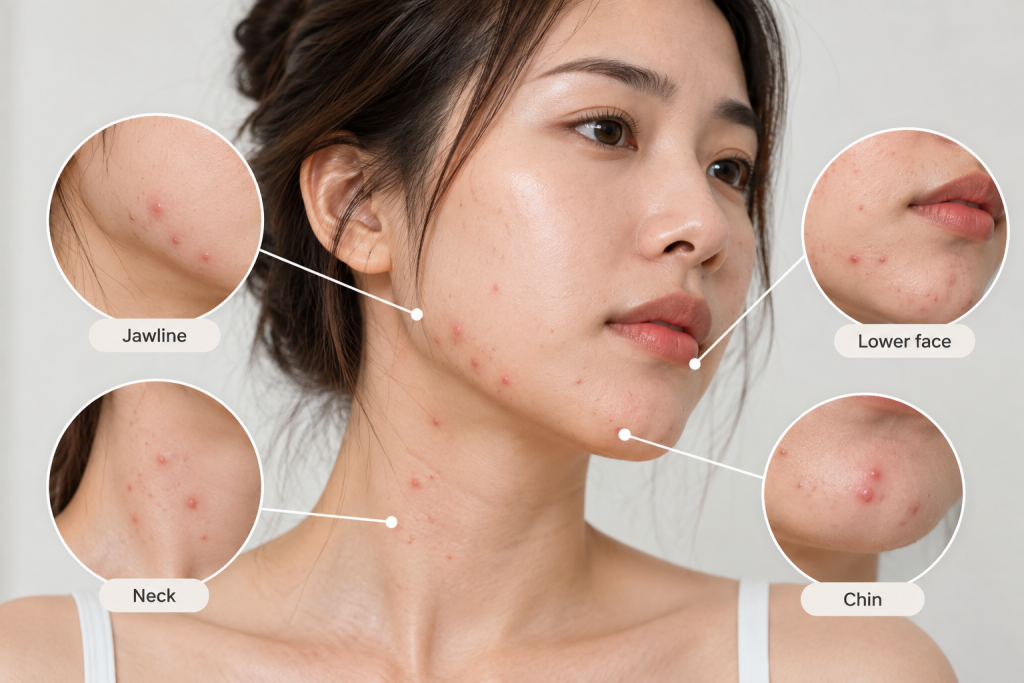
However, the location of acne alone cannot confirm that it is hormonal acne.
Persistent adult acne may have several contributing factors, and a medical assessment may be appropriate if breakouts are frequent, painful or difficult to control.
Could PCOS be related to acne?
Polycystic ovary syndrome (PCOS) involves hormonal changes and can be associated with acne in some women. HealthHub specifically lists PCOS among conditions that may contribute to acne.
If recurring acne occurs alongside other symptoms such as irregular menstrual cycles or other signs of hormonal imbalance, speak with a doctor rather than assuming that skincare alone is the solution.
2. Your Skincare or Makeup Could Be Contributing to Clogged Pores
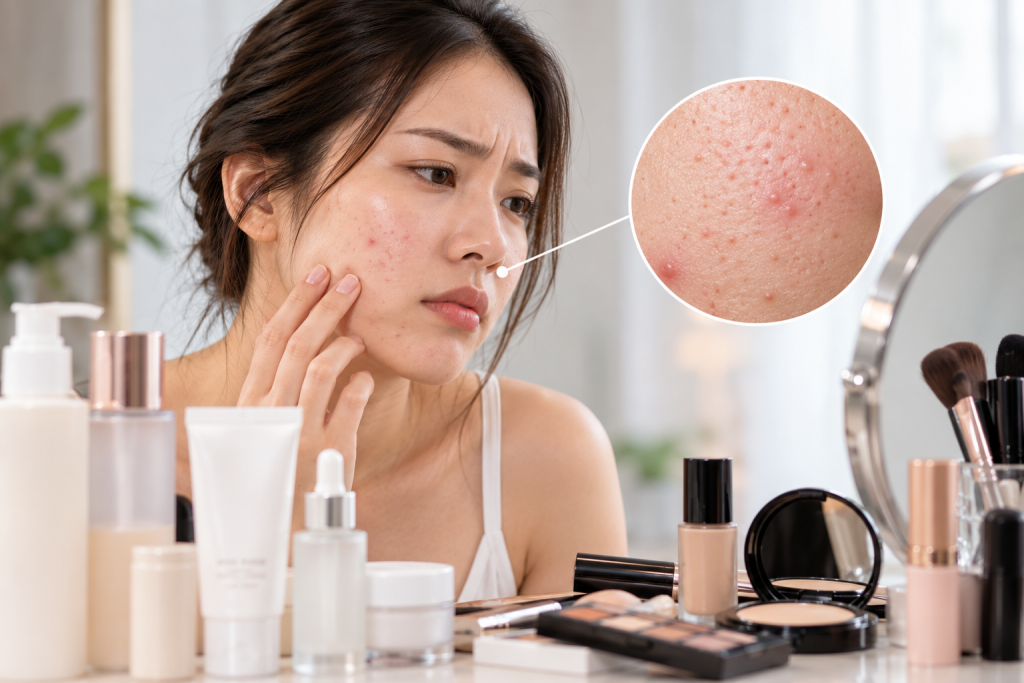
Sometimes the products used to improve your skin may unintentionally contribute to breakouts.
Certain cosmetics, moisturisers, sunscreens or makeup products can be more likely to clog pores. HealthHub recommends choosing products labelled “non-comedogenic” for acne-prone skin.
This does not mean that everyone with acne needs to avoid moisturiser.
In fact, dermatologists may recommend moisturising as part of an acne skincare routine, particularly when acne treatments cause dryness or irritation. The American Academy of Dermatology recommends looking for products described as oil-free or non-comedogenic.
Check your entire skincare routine
If your acne started or worsened after introducing a new product, review:
- Cleanser
- Toner
- Serum
- Moisturiser
- Sunscreen
- Foundation
- Concealer
- Makeup remover
- Facial oils
- Exfoliating products
You do not necessarily need a complicated routine.
For acne-prone skin, a simpler routine can sometimes make it easier to identify products that may be irritating or contributing to congestion.
3. Your Haircare Products May Be Causing Forehead Breakouts
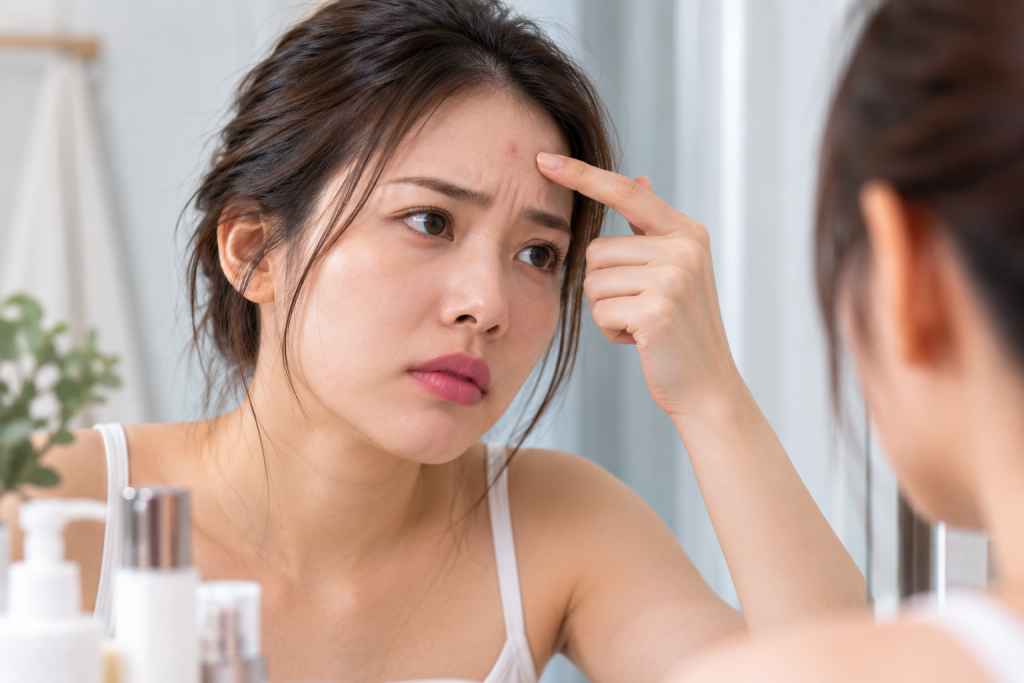
Acne does not always originate from facial skincare.
Hair products containing oils or other ingredients can come into contact with the forehead, temples and hairline. The American Academy of Dermatology notes that shampoos, conditioners and styling products can contribute to small breakouts around the hairline and forehead in some people.
This may be particularly relevant if you notice:
- Small bumps around the hairline
- Breakouts on the forehead
- Acne appearing where hair repeatedly touches the skin
- Breakouts after applying leave-in hair products
If this sounds familiar, consider keeping hair products away from facial skin and washing your face after products have been rinsed from your hair.
4. Stress May Be Making Your Acne Worse
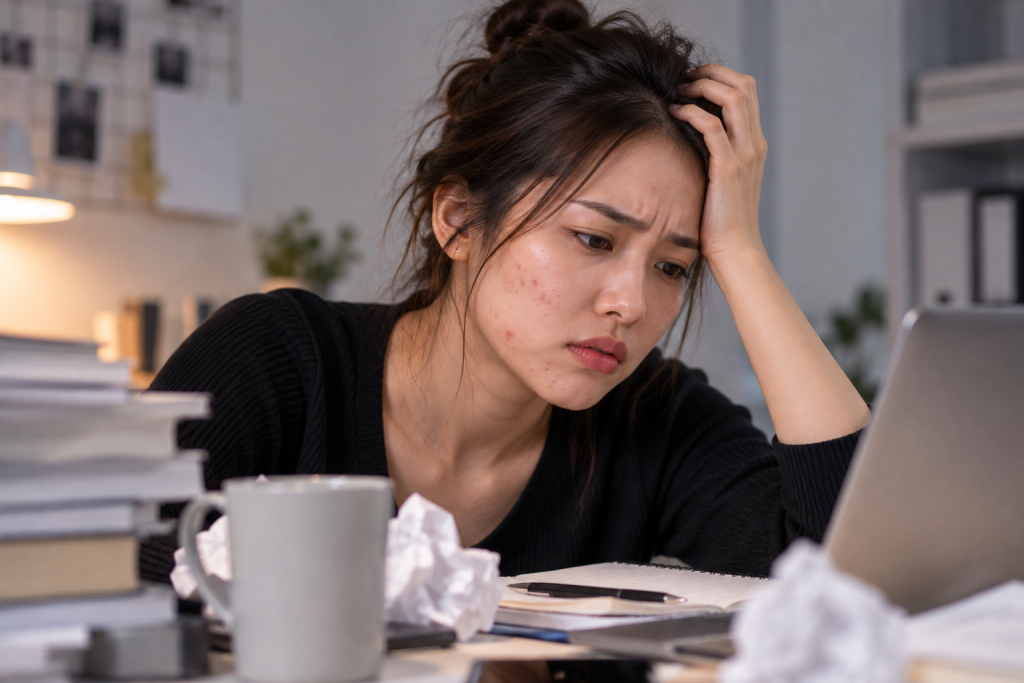
Stress does not mean that acne is “all in your head”.
There is evidence that stress can be associated with acne flare-ups. HealthHub notes that studies have found acne may worsen during stressful periods.
The relationship is complex. Stress can affect hormonal signalling, skin behaviour and everyday habits. When people are stressed, they may also sleep less, touch their face more frequently or change their skincare habits.
What can you do?
You do not need to eliminate all stress to manage acne.
Instead, focus on sustainable habits such as:
- Maintaining a regular sleep schedule
- Exercising regularly
- Taking breaks during prolonged periods of work or study
- Practising relaxation techniques
- Maintaining a consistent skincare routine
- Avoiding unnecessary touching or picking of your skin
HealthHub recommends regular sleep and stress management as part of acne self-care.
5. Picking or Squeezing Your Pimples Can Create a Cycle of Inflammation
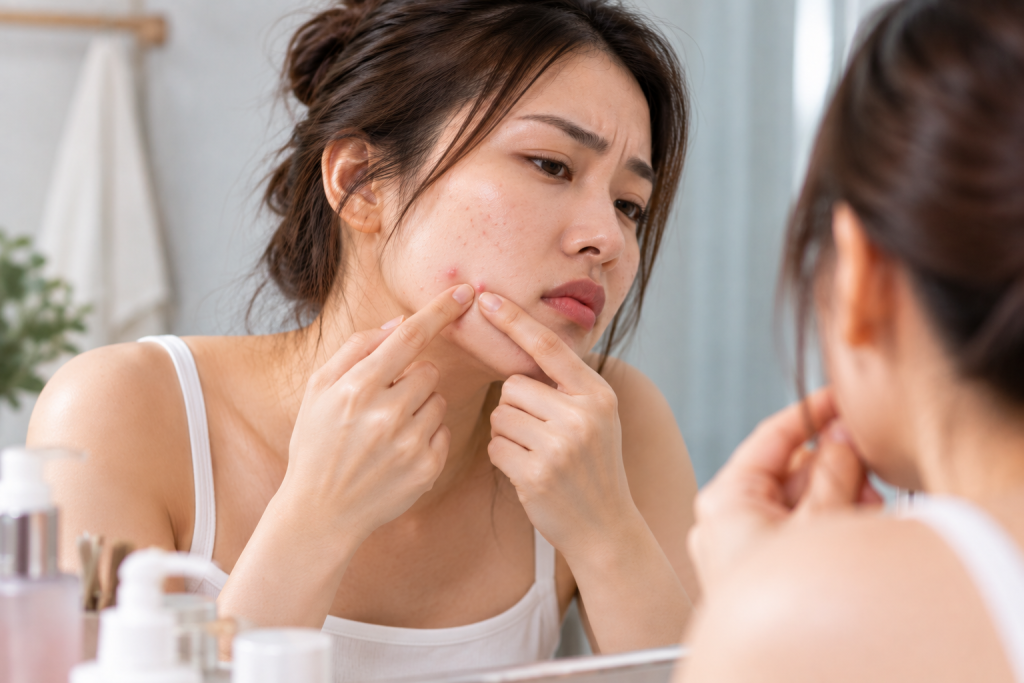
When a pimple appears, it can be tempting to squeeze it.
However, repeatedly picking, popping or squeezing acne can increase inflammation and may increase the risk of post-acne marks and scarring. HealthHub specifically advises against picking or squeezing acne.
The American Academy of Dermatology also cautions that manipulating pimples can make acne take longer to clear and increase the risk of scarring and post-inflammatory hyperpigmentation.
What should you do instead?
Try to leave inflamed pimples alone and continue with an appropriate acne skincare routine.
If you repeatedly develop large, painful or deep lesions, consider consulting a doctor or dermatologist instead of attempting to remove them yourself.
6. Friction and Sweating Can Trigger or Worsen Breakouts
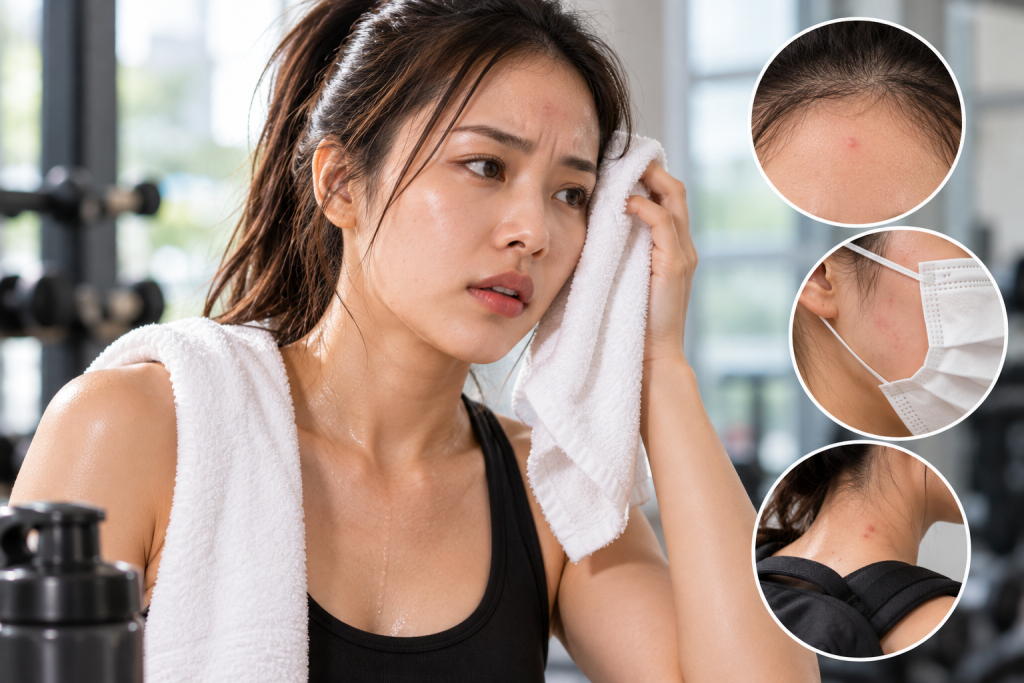
Acne can sometimes be associated with repeated friction, pressure or occlusion.
HealthHub lists items such as face masks, headbands and backpacks among factors that may contribute to acne through rubbing against the skin.
For people who exercise regularly, sweat and friction can also create conditions in which acne-prone areas become irritated.
Practical steps include:
- Change out of sweaty clothing after exercise.
- Clean equipment that repeatedly touches your face.
- Avoid unnecessarily tight headbands or straps.
- Keep hands away from your face.
- Cleanse gently rather than scrubbing aggressively.
The goal is to reduce irritation without over-cleansing.
7. Your Diet May Play a Role — But It Is Not the Whole Story

You may have heard that certain foods “cause acne”.
The relationship between diet and acne is more complicated than that.
HealthHub notes that foods high in sugar may worsen acne in some people.
This does not mean that eating one dessert or drinking one sweet beverage will automatically cause a pimple.
Rather than eliminating large numbers of foods unnecessarily, focus on an overall balanced eating pattern. Singapore’s HealthHub recommends using My Healthy Plate as a general guide for balanced meals, including wholegrains, protein sources and vegetables.
If you notice a consistent relationship between a particular food pattern and your breakouts, discussing this with a qualified healthcare professional or dietitian may be more useful than following restrictive internet trends.
8. Certain Medications Can Be Associated With Acne
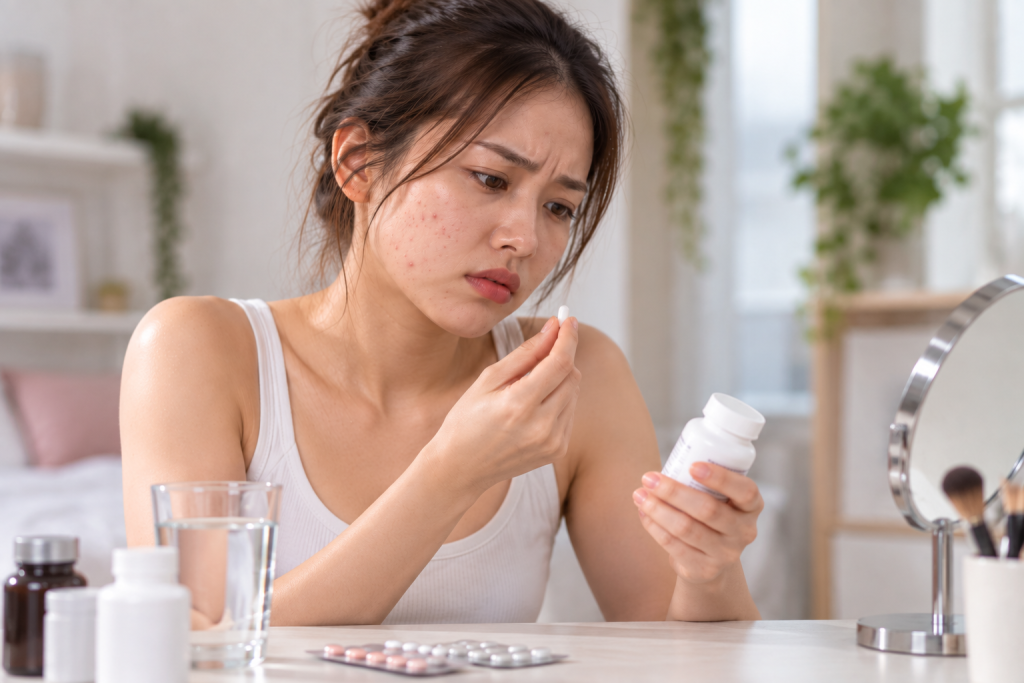
Some medications can contribute to acne in certain individuals.
HealthHub lists medications including steroids, lithium and some seizure medications among possible contributors to acne.
If your acne appeared or became significantly worse after starting a medication, do not stop the medication yourself.
Instead, speak with the doctor who prescribed it. They can determine whether the medication could be contributing to your skin changes and whether an alternative approach is appropriate.
9. Genetics Can Influence Your Likelihood of Developing Acne
Your family history may also matter.
Research cited by the American Academy of Dermatology suggests that some people have a genetic predisposition towards adult acne.
If one or both parents experienced persistent acne, you may also be more prone to developing acne.
This does not mean recurring acne is unavoidable. It simply means that genetics may be one factor among several influencing your skin.
Why Does My Acne Keep Coming Back in the Same Place?
Recurring acne in the same area can be particularly frustrating.
For example, you may repeatedly experience breakouts around your:
- Chin
- Jawline
- Forehead
- Hairline
- Cheeks
There is no universal “face map” that can identify the cause of acne based purely on where a pimple appears.
Instead, look at the broader pattern.
Ask yourself:
Does it occur at a particular time of the month?
This may suggest a hormonal pattern.
Did it start after changing skincare or makeup?
A product may be contributing to congestion or irritation.
Is it concentrated around your hairline?
Haircare products may be worth reviewing.
Does it worsen during stressful periods?
Stress may be one contributing factor.
Are you frequently touching or picking that area?
Mechanical irritation may be worsening the inflammation.
Looking at these patterns can provide useful information when discussing your acne with a healthcare professional.
Is It Actually Acne?
Not every red bump is acne.
Some conditions can look similar to acne, including folliculitis and perioral dermatitis. The American Academy of Dermatology notes that conditions that resemble acne may require different treatment approaches.
This is particularly important if:
- Your breakouts are very itchy.
- All the bumps look very similar.
- The rash is concentrated around the mouth.
- Your skin suddenly develops widespread bumps.
- Standard acne products do not seem to help.
- The condition repeatedly returns despite appropriate care.
Rather than continuously changing products, consider having the condition assessed.
What Can I Do to Reduce Recurring Breakouts?
There is no single skincare routine that works for everyone, but several basic principles can help support acne-prone skin.
1. Cleanse Gently
HealthHub recommends washing the face up to twice daily and avoiding harsh scrubbing or peeling products that can irritate the skin.
You do not need to scrub your skin aggressively to remove oil.
In fact, excessive irritation may make acne-prone skin more difficult to manage.
2. Choose Non-Comedogenic Products
Look for skincare, sunscreen and makeup products labelled:
- Non-comedogenic
- Oil-free
- Won’t clog pores
These labels can help when selecting products for acne-prone skin.
3. Avoid Constantly Changing Products
Acne treatment takes time.
The American Academy of Dermatology notes that improvement may take several weeks, and repeatedly changing treatments can irritate the skin.
Give an appropriate routine sufficient time to work unless you experience significant irritation or your healthcare professional advises otherwise.
4. Avoid Picking Your Skin
This is one of the simplest things you can control.
Leaving pimples alone can reduce unnecessary inflammation and help reduce the risk of post-acne marks and scars.
5. Protect Your Skin From the Sun
Sun protection remains important when managing acne and post-acne marks.
The American Academy of Dermatology recommends broad-spectrum, SPF 30 or higher, non-comedogenic sunscreen for acne-prone skin.
What Acne Treatments Are Available in Singapore?
The appropriate treatment depends on the type and severity of acne.
Depending on the individual, acne treatment may include topical products containing ingredients such as:
- Benzoyl peroxide
- Salicylic acid
- Adapalene
- Azelaic acid
- Prescription topical medications
More persistent or moderate-to-severe acne may require prescription treatment. HealthHub recommends seeking medical advice when acne is severe, associated with nodules, cysts or scars, or does not improve after an appropriate trial of treatment.
The American Academy of Dermatology’s acne guidelines also support several topical and systemic treatment approaches, with the choice depending on the individual’s condition and treatment needs.
What about aesthetic treatments?
For some individuals, in-clinic procedures may be considered as part of a broader approach to managing acne-prone skin.
At DRHAACH, our current treatment options include procedures such as Carbon Laser Peel and Chemical Peel, which may be considered for selected acne-related concerns following professional assessment. Our treatment information describes Carbon Laser Peel as an option for oily, acne-prone and congested skin, while Chemical Peel treatments may be used for certain types of acne.
However, an aesthetic procedure should not automatically be considered a substitute for medical acne management.
For recurring, painful or severe acne, appropriate medical assessment is important because controlling active acne can also help reduce the risk of subsequent scarring.
When Should You Seek Professional Acne Treatment?
You do not necessarily need professional treatment for every occasional pimple.
However, it may be appropriate to seek medical advice if:
- Your acne keeps returning despite consistent skincare.
- You have painful or deep pimples.
- You have nodules or cysts.
- Your acne is leaving scars.
- Dark marks are developing after repeated breakouts.
- Your acne is affecting your confidence or daily life.
- Your acne suddenly becomes significantly worse.
- You are unsure whether the bumps are actually acne.
- You have signs that may suggest an underlying hormonal issue.
HealthHub recommends seeing a doctor or dermatologist if acne does not improve after four to six weeks of suitable treatment recommended by a pharmacist, or if severe acne, nodules, cysts or scarring are present.
At DRHAACH, an assessment can help determine whether your concern is primarily active acne, acne-related congestion, post-acne marks or another skin condition requiring a different approach.
Explore DRHAACH’s acne treatment information
Acne Treatment Singapore: Why Individual Assessment Matters
When searching for Acne Treatment Singapore, it is easy to find a long list of products, facials, peels, lasers and home remedies.
But more treatment does not necessarily mean better treatment.
Acne can have different patterns and levels of severity. A treatment that may be suitable for oily, congested skin may not be appropriate for someone with significant inflammation, sensitive skin or deep nodular acne.
This is why an individual assessment matters.
At DRHAACH, our approach is to consider the person’s skin condition, acne pattern and treatment history before determining what options may be appropriate. Our doctors provide personalised aesthetic care for concerns including acne and acne-prone skin.
If your breakouts continue to return despite a consistent routine, the next step may not be another new skincare product. It may be understanding why the acne keeps recurring in the first place.
Book a consultation with DRHAACH
Frequently Asked Questions About Recurring Acne
Why do I keep getting acne even though I wash my face?
Acne is not simply caused by poor hygiene. Hormones, sebum production, clogged follicles, inflammation, genetics, stress, skincare products, friction and other factors can contribute to recurring acne.
Over-cleansing or scrubbing aggressively can also irritate acne-prone skin.
Why does my acne keep coming back?
Recurring acne may happen because the factors contributing to acne formation are still present. These may include hormonal fluctuations, excess sebum, clogged pores, inflammation, genetics, stress or products that are not suitable for your skin.
Why am I suddenly getting acne as an adult?
Adult acne is possible even if you did not experience significant acne as a teenager. Hormonal fluctuations, stress, genetics and skincare or haircare products may contribute.
Can stress cause acne?
Stress may contribute to acne flare-ups. HealthHub notes that studies have associated stressful periods with worsening acne.
Stress is generally only one potential contributing factor, rather than the sole explanation for recurring acne.
Can certain foods cause acne?
Diet may influence acne in some individuals. HealthHub notes that foods high in sugar may worsen acne.
However, acne is influenced by multiple factors, so eliminating individual foods should not be treated as a universal solution.
Should I pop a pimple?
It is generally better to avoid picking, popping or squeezing acne. Manipulating pimples can increase inflammation and the risk of scarring and post-inflammatory hyperpigmentation.
How long does acne treatment take to work?
Acne treatment generally requires consistency and patience. The American Academy of Dermatology notes that improvement can take several weeks, while treatment plans may take longer depending on the severity and type of acne.
When should I see a doctor for acne?
Consider seeing a doctor or dermatologist if your acne is severe, painful, persistent, associated with nodules or cysts, leaving scars, or not improving with appropriate treatment.
Can aesthetic treatments help acne-prone skin?
Certain in-clinic treatments may be considered for selected acne-related concerns. At DRHAACH, options such as Carbon Laser Peel and Chemical Peel are offered for specific skin concerns, including selected acne-related concerns. Suitability depends on the individual’s skin condition and should be assessed professionally.
Is recurring acne always hormonal?
No. Hormonal changes can contribute to acne, but recurring acne may also involve genetics, clogged pores, excess sebum, inflammation, stress, skincare or haircare products, friction and certain medications.
Conclusion: Recurring Acne Usually Has More Than One Factor
If you keep getting acne, it does not necessarily mean that you are doing something wrong.
Acne is a multifactorial skin condition. Hormonal changes, sebum production, clogged pores, inflammation, genetics, stress, skincare products, haircare products, friction and certain medications can all contribute to recurring breakouts.
The most useful approach is to look for patterns rather than treating every pimple as an isolated problem.
Maintain a gentle and consistent skincare routine, choose non-comedogenic products, avoid picking or squeezing your skin and pay attention to factors such as hormonal patterns, stress and product changes.
If acne remains persistent, painful or difficult to manage, professional assessment can help determine whether you need a different approach.
For those searching for Acne Treatment Singapore, DRHAACH provides personalised aesthetic care for acne and other skin concerns. The appropriate treatment depends on your individual skin condition, and professional assessment can help determine which options may be suitable.
Learn more about acne care at DRHAACH
References:
HealthHub Singapore – Acne at Thirty
American Academy of Dermatology – Acne: Diagnosis and Treatment
American Academy of Dermatology – Adult Acne