

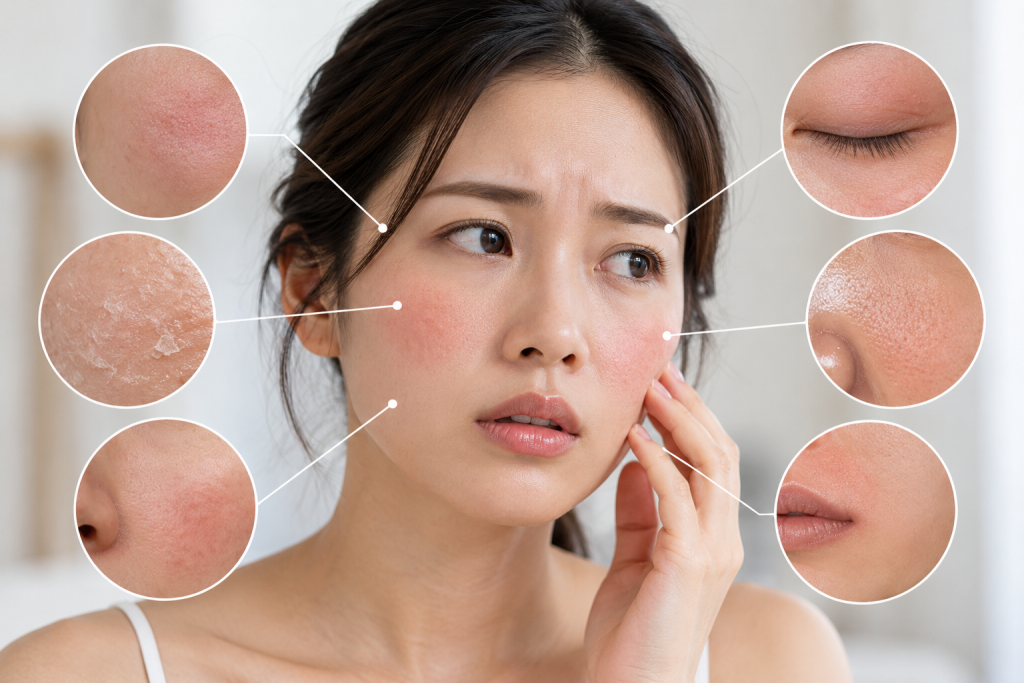
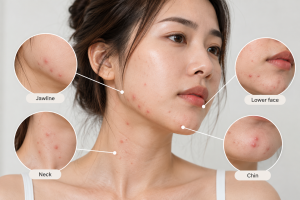


Your skin can look oily and still feel dry. It can appear normal one day and suddenly become tight, flaky, red or unusually sensitive the next. When several of these changes happen together, your skin barrier may not be functioning as effectively as it should.
The good news is that skin barrier repair does not necessarily mean adding more products to your routine. In many cases, the first step is understanding what may be disrupting the barrier and simplifying your skincare routine while supporting the skin’s natural protective function.
At Dr HAACH, we often see that concerns such as dehydration, sensitivity, redness and uneven texture can overlap. However, these symptoms do not always have the same underlying cause. A careful assessment is therefore important before introducing stronger skincare ingredients or aesthetic treatments.
This guide explains what the skin barrier is, the common signs of a damaged skin barrier, what can cause it, how to approach skin barrier repair at home, and when professional assessment may be appropriate.
Important: This article provides general skincare and health information and is not intended to diagnose or treat a medical condition. Persistent redness, itching, rashes, pain, swelling, cracking, oozing or worsening symptoms should be assessed by a qualified healthcare professional.
What Is the Skin Barrier?
The skin barrier refers primarily to the outermost part of the skin, particularly the stratum corneum. It plays an important role in limiting excessive water loss while helping protect the body from environmental irritants and other external stressors.
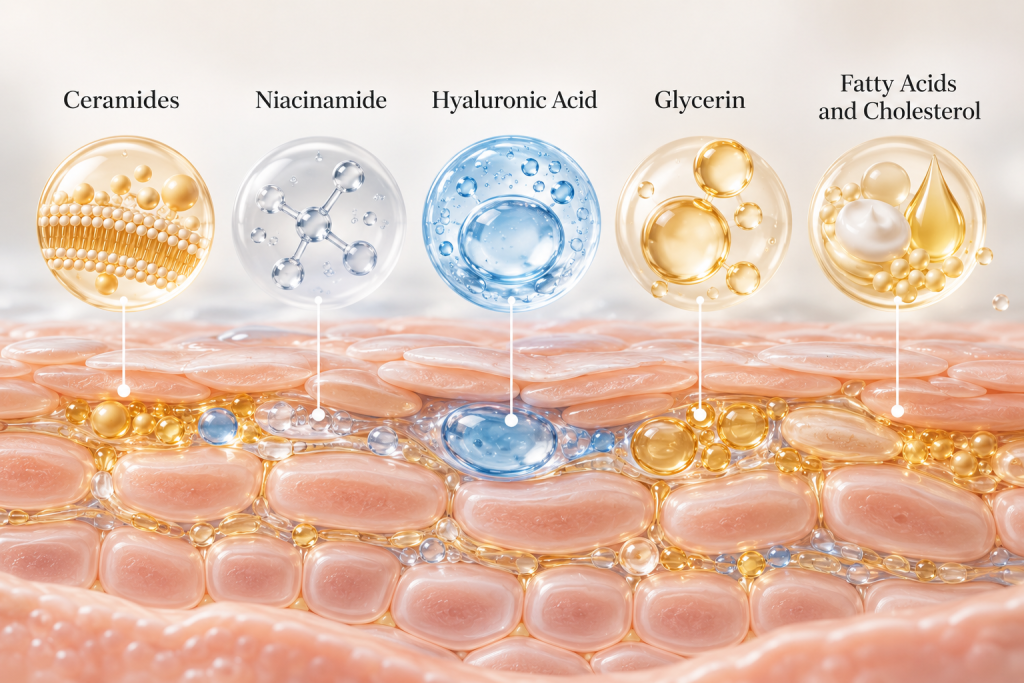
The stratum corneum contains skin cells surrounded by an organised mixture of lipids, including ceramides, cholesterol and fatty acids. Together, these components contribute to the skin’s permeability barrier.
A healthy skin barrier helps your skin retain moisture and maintain its normal protective functions. When barrier function is disrupted, water can escape more readily from the skin, potentially contributing to dryness, roughness and increased sensitivity.
This is why skin barrier repair is not simply about making the skin feel moisturised temporarily. The broader goal is to support the skin’s barrier function and reduce factors that may be contributing to ongoing disruption.
What Does a Damaged Skin Barrier Look and Feel Like?
There is no single symptom that proves your skin barrier is damaged. Similar symptoms can occur with eczema, contact dermatitis, rosacea, acne treatments and other skin conditions.
However, several changes occurring together may suggest that your skin is struggling to maintain its normal barrier function.
1. Your Skin Feels Tight After Cleansing
If your face consistently feels tight, dry or uncomfortable immediately after washing, your cleansing routine may be removing more oil from the skin than necessary.
This can be particularly noticeable when using strong cleansers, very hot water or washing the face more frequently than needed.
The sensation of tightness does not necessarily mean your skin is “squeaky clean”. It may indicate that your cleansing routine needs to be gentler.
2. Products Suddenly Start Stinging
One of the more noticeable signs of increased skin sensitivity is when products that you previously tolerated begin to sting or burn.
This may happen with moisturisers, serums, sunscreen or even plain water.
However, persistent burning or stinging should not automatically be attributed to a damaged skin barrier. Irritant or allergic contact dermatitis and other skin conditions can produce similar symptoms.
If the reaction continues despite simplifying your routine, professional assessment may be appropriate.
3. Your Skin Is Dry but Still Looks Oily
This combination can be confusing.
You may notice an oily T-zone while your cheeks feel tight, rough or uncomfortable. Rather than assuming that your entire face needs stronger oil-control products, consider whether different areas of your skin have different needs.
Using aggressive oil-control products across the entire face can sometimes worsen dryness and discomfort.
The American Academy of Dermatology recommends adapting moisturisation to individual skin needs rather than assuming that one product or routine suits every area of the face.
4. Increased Flaking or Rough Texture
Visible flakes, rough patches and a less smooth skin surface can occur when the outer layer of the skin becomes excessively dry.
Flaking can also occur with inflammatory skin conditions, reactions to skincare ingredients or overuse of exfoliating products.
For this reason, repeatedly exfoliating flaky skin is not necessarily the answer. Removing more surface cells may further irritate already-sensitive skin.
5. Redness Appears More Easily
A disrupted barrier may be associated with increased sensitivity to environmental or skincare triggers.
You might notice that your skin becomes red after cleansing, applying products, exercising, spending time outdoors or moving between air-conditioned and hot environments.
However, persistent or recurrent facial redness can also be associated with conditions such as rosacea or dermatitis. It should therefore not automatically be labelled as a “damaged skin barrier”.
6. Your Skin Feels Dry Even After Moisturising
Another common complaint is:
“I keep applying moisturiser, but my skin still feels dry.”
Moisturiser can support hydration and barrier function, but the result depends on the formulation, how it is used and what is causing the dryness in the first place.
HealthHub Singapore notes that moisturisers help hydrate the skin, soothe dryness and improve skin barrier function, while the appropriate formulation can vary from lotions to creams and ointments depending on skin needs.
7. Your Skin Becomes More Reactive Than Usual
You may find that your skin reacts to products, heat, sweat or environmental changes more readily than it used to.
Again, increased reactivity is not specific to barrier disruption. If sensitivity is persistent, it is worth considering whether an underlying skin condition, allergy or irritation may be involved.
What Can Damage or Weaken the Skin Barrier?
The skin barrier can be affected by a combination of internal and external factors.
Over-cleansing
Washing the face excessively or using harsh cleansing products may contribute to dryness and irritation.
Your face does not necessarily need to feel completely stripped of oil after cleansing.
Hot Water
Long, hot showers can remove natural oils from the skin and contribute to dryness.
HealthHub Singapore specifically advises people managing eczema to avoid hot water because it can strip natural oils and worsen dryness.
Excessive Exfoliation
Chemical exfoliants and physical scrubs can be useful in appropriate circumstances, but more exfoliation is not automatically better.
Using multiple exfoliating acids, scrubs or resurfacing products at the same time may increase irritation, particularly if your skin is already dry or sensitive.
Introducing Too Many Active Ingredients
Retinoids, exfoliating acids, benzoyl peroxide and other active ingredients can have a useful role in skincare. However, introducing several new actives simultaneously makes it harder to identify what is irritating your skin.
A simple routine can sometimes be more appropriate while your skin settles.
Fragrance and Irritating Ingredients
Fragrance can trigger irritation or flare-ups in people with sensitive or eczema-prone skin. The American Academy of Dermatology recommends choosing fragrance-free rather than simply “unscented” products for people prone to irritation.
Environmental Stress
Singapore’s hot and humid outdoor environment is very different from heavily air-conditioned indoor environments.
Frequent transitions between heat outdoors and air-conditioned spaces can leave some people experiencing changes in how their skin feels. Sun exposure, sweat and environmental pollutants can also add to the overall stress placed on the skin.
These factors do not automatically mean your barrier is damaged, but they are worth considering when your skin suddenly becomes uncomfortable.
Aesthetic Treatments and Skin Procedures
Procedures that intentionally stimulate or remove parts of the outer skin layer can temporarily alter the skin’s appearance and sensitivity.
This does not mean aesthetic treatments are inherently harmful. It means treatment selection and timing matter.
If your skin is already irritated, adding another potentially irritating procedure may not be appropriate. A qualified professional should consider the condition of your skin before recommending treatments that involve exfoliation, resurfacing or other forms of controlled skin stimulation.
How to Approach Skin Barrier Repair
When your skin is irritated, the instinct may be to add another serum, mask or treatment.
In many situations, a more sensible first step is to simplify.
Step 1: Simplify Your Skincare Routine
A basic routine can consist of:
Morning
- Gentle cleansing, if required
- Moisturiser
- Broad-spectrum sunscreen
Evening
- Gentle cleanser
- Moisturiser
You do not necessarily need multiple serums, exfoliants and treatment products every day.
The objective during a period of sensitivity is to reduce unnecessary irritation while maintaining hydration and sun protection.
Step 2: Choose a Suitable Moisturiser
Moisturisers generally work through combinations of humectants, emollients and occlusives.
- Humectants help attract and retain water.
- Emollients help smooth the spaces between skin cells.
- Occlusives help reduce water loss by forming a protective layer.
Research reviews suggest that moisturisers can support several aspects of the skin barrier and reduce transepidermal water loss.
For dry or sensitive skin, ingredients such as ceramides may also be worth considering. A review of clinical studies found that ceramide-containing formulations may improve hydration and barrier function, particularly in dry and atopic skin.
Step 3: Moisturise While the Skin Is Slightly Damp
Timing can make a difference.
Applying moisturiser shortly after cleansing or bathing can help retain water in the skin. HealthHub Singapore recommends applying moisturisers within five minutes after bathing or showering for people managing eczema.
You do not have to wait until your skin feels completely dry before moisturising.
Step 4: Temporarily Reduce Strong Exfoliation
If your skin is stinging, peeling or unusually sensitive, consider taking a break from aggressive exfoliation.
This includes:
- Physical scrubs
- Frequent AHA or BHA use
- Multiple exfoliating products
- Strong resurfacing treatments
Once the skin is comfortable again, active ingredients can be reintroduced gradually when appropriate.
Step 5: Protect Your Skin From the Sun
Daily sun protection remains important even when your main concern is skin barrier health.
The American Academy of Dermatology recommends broad-spectrum sunscreen with SPF 30 or higher as part of daily sun protection.
For Singapore’s strong year-round UV exposure, sunscreen is particularly relevant to a consistent skincare routine.
Step 6: Introduce New Products Slowly
If your skin is sensitive, avoid changing your entire skincare routine at once.
Introducing one new product at a time makes it easier to identify a possible source of irritation.
The American Academy of Dermatology also recommends testing new skincare products before applying them more widely, particularly for people with eczema-prone or sensitive skin.
How Can the Dr HAACH DermaCell Series Support the Skin Barrier?
Supporting the skin barrier is not simply about adding more moisture. A balanced approach also considers hydration, skin comfort, protection and the need to minimise unnecessary irritation.
At Dr HAACH, the DermaCell Renewal Series is designed around this multi-action approach, bringing together ingredients that support hydration, skin resilience, surface renewal and the skin’s natural protective function.
Derma Cell Renewal Activating Essence Base
The Derma Cell Renewal Activating Essence Base is the first step in the DermaCell Renewal routine, helping to prepare the skin for the skincare that follows.
Formulated with niacinamide, Centella Asiatica, Cordyceps Militaris Extract and Lactobacillus/Pear Juice Ferment Filtrate, it helps rebalance skin exposed to daily stress while supporting skin comfort and resilience. Niacinamide also plays an important role in supporting the skin barrier and maintaining a healthy moisture balance.
The formula contains a gentle concentration of salicylic acid, which encourages surface renewal and helps improve the appearance of uneven texture and congestion. This makes the Activating Essence Base more than a hydration step — it combines skin-balancing, barrier-supportive and gentle renewal benefits in a lightweight pre-serum essence.
Derma Cell Renewal Collagen Hydrating Essence
Following the Activating Essence Base, the Derma Cell Renewal Collagen Hydrating Essence provides a hydration-focused step to help replenish and maintain moisture.
It contains 3% niacinamide and beta-glucan, together with conditioning ingredients that help support skin hydration and comfort. Maintaining adequate hydration is an important part of supporting normal skin-barrier function, particularly when the skin feels dry, tight or less comfortable than usual.
Derma Cell Renewal Advanced Repair Mask
For additional nourishment and moisture, the Derma Cell Renewal Advanced Repair Mask provides a more intensive conditioning step.
Its formulation combines 3% niacinamide, beta-glucan, macadamia seed oil and allantoin to support hydration, skin conditioning and comfort. It can be incorporated when the skin feels particularly dry, stressed or in need of additional moisturising support.
Derma Cell Renewal Brightening Night Cream
The Derma Cell Renewal Brightening Night Cream provides the final moisturising step in the evening routine, helping to maintain hydration while the skin is at rest.
Formulated with 3% niacinamide, hyaluronic acid and grape seed oil, it provides hydration and conditioning support while addressing the appearance of dullness and uneven-looking skin tone.
A More Complete Approach to Skin Barrier Support
Together, the DermaCell Renewal Series takes a more comprehensive approach to skin health — beginning with skin preparation and gentle renewal, followed by hydration, conditioning and overnight moisturisation.
For skin experiencing signs of barrier stress, the goal is not necessarily to use more products. It is to create a simpler, well-balanced routine that supports hydration and skin comfort while avoiding unnecessary irritation.
This also means that skincare should be adjusted according to the condition of the skin. If persistent redness, burning, itching, flaking or sensitivity continues despite simplifying your routine, professional assessment may be appropriate to determine whether an underlying skin condition is contributing to the symptoms.
Can Skin Barrier Damage Be Treated With Aesthetic Treatments?
This depends on what is actually causing the skin concern.
Skin barrier repair should not automatically mean undergoing an aesthetic procedure.
For someone experiencing simple dryness from an overly aggressive skincare routine, adjusting cleansing, moisturising and product use may be more appropriate than introducing an in-clinic procedure.
On the other hand, persistent dehydration, sensitivity, redness or changes in skin texture may warrant a professional assessment to determine whether there is an underlying concern that requires a different approach.
At Dr HAACH, our approach is to consider the individual’s skin condition rather than assuming that the same treatment is appropriate for everyone. Our aesthetic doctors assess concerns such as sensitivity, dryness, dehydration and redness when considering treatment options.
Professional Treatments for Skin Hydration
When dehydration is a key concern, professional treatments may provide additional support alongside a well-balanced skincare routine. The most suitable treatment depends on the condition of the skin, the level of dehydration and the individual’s overall skin concerns.
At Dr HAACH, Skin Boosters include hyaluronic-acid-based Hydration Booster treatments designed to support skin hydration, elasticity and overall skin appearance.
These minimally invasive treatments may be considered for individuals looking to enhance skin hydration and improve the appearance of skin that looks dry, dull or less supple.
However, treatment should always begin with an assessment of why the skin is experiencing dryness, sensitivity or discomfort. Addressing contributing factors and establishing appropriate daily skincare remain important parts of supporting healthy skin-barrier function. For some individuals, restoring a simple and consistent skincare routine may be the more appropriate first step, while others may benefit from combining professional treatments with targeted home care.
Be Careful With Exfoliating Treatments
Chemical peels and other resurfacing procedures intentionally affect the outer layers of the skin. They can have an appropriate role for certain concerns, but they should not automatically be used when someone is experiencing active irritation or suspected barrier disruption.
At Dr HAACH, chemical peels are customised according to individual skin concerns and involve controlled exfoliation of the outer skin layers.
If your skin is currently stinging, inflamed or unusually reactive, discuss this with the doctor before considering an exfoliating procedure.
What About Skincare Products for Barrier Support?
Professional treatment does not replace a consistent home routine.
For people whose skin is experiencing dehydration or sensitivity, choosing a suitable moisturising and restorative product may be part of a broader skincare plan.
For example, Dr HAACH’s Derma Cell Renewal Advanced Repair Mask is formulated with ingredients including niacinamide, beta-glucan and macadamia seed oil, and is positioned by the brand for hydration, moisture retention and skin comfort.
It is important to distinguish this from a medical treatment claim: a cosmetic skincare product may support hydration and the appearance or feel of the skin, but persistent or unexplained skin symptoms may require medical assessment.
Likewise, not every active skincare product is appropriate during a period of sensitivity. Dr HAACH’s Derma Cell Renewal Activating Essence Base, for example, contains salicylic acid and is designed for concerns including dullness, uneven texture and congestion.
For someone experiencing significant irritation, adding an exfoliating active simply because it is part of a normal routine may not be appropriate. Product selection should follow the current condition of the skin rather than a fixed routine.
How Long Does Skin Barrier Repair Take?
The time needed for the skin to regain its balance can vary depending on the extent of irritation, the underlying cause and how consistently the skin is cared for.
The answer depends on:
- What caused the irritation
- How severe the disruption is
- Whether an underlying skin condition is present
- How quickly irritating factors are removed
- The individual’s skin type
- Whether the skin is exposed to ongoing triggers
Minor dryness caused by a temporary change in skincare may improve after simplifying the routine and moisturising consistently.
However, persistent inflammation, eczema, dermatitis or another underlying condition may require professional treatment rather than skincare changes alone.
If your symptoms are not improving or are getting worse despite self-care, it is worth seeking medical advice.
HealthHub Singapore recommends seeing a doctor if eczema symptoms do not improve within one to two weeks after self-treatment or become worse.
When Should You See a Doctor?
Not every case of dry or sensitive skin is simply a damaged skin barrier.
Consider seeking professional assessment if you experience:
- Persistent or worsening redness
- Significant itching
- Pain or burning
- Cracked or bleeding skin
- Swelling
- Oozing or crusting
- Recurrent rashes
- Sudden reactions to multiple products
- Symptoms that do not improve after simplifying your skincare routine
- Skin changes that are affecting your daily activities
These symptoms can occur with different dermatological conditions and may require a proper assessment.
For persistent or severe symptoms, it is more appropriate to identify the underlying cause than to keep changing skincare products.
A Simple Skin Barrier Repair Routine for Singapore
For someone experiencing mild dryness or sensitivity, a simple routine may look like this:
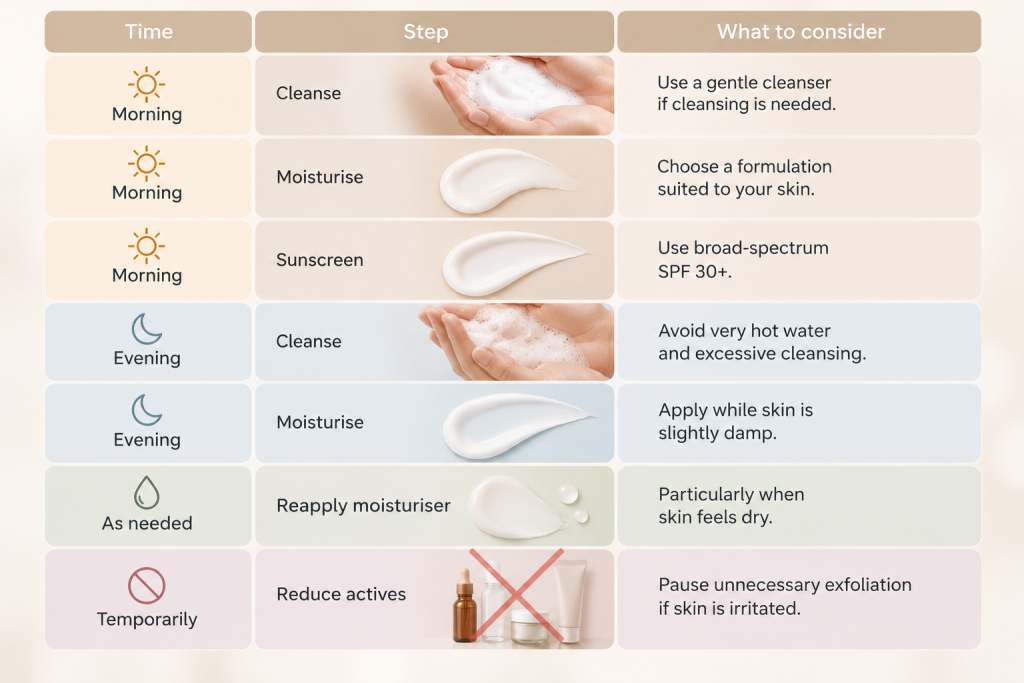
The important point is consistency rather than complexity.
If your skin is comfortable with a simple routine, there is no need to add multiple products simply because they are marketed for “barrier repair”.
Frequently Asked Questions About Skin Barrier Repair
What is the fastest way to repair a damaged skin barrier?
There is no guaranteed overnight solution. A sensible starting point is to reduce potential irritants, use gentle cleansing, moisturise consistently and protect the skin from UV exposure.
If symptoms are significant or persistent, professional assessment can help determine whether something other than simple barrier disruption is involved.
How do I know if my skin barrier is damaged?
Common signs can include tightness, dryness, flaking, increased sensitivity, stinging when products are applied and a rougher skin texture.
However, these symptoms are not specific to barrier damage and can also occur with conditions such as eczema or contact dermatitis.
Can oily skin have a damaged skin barrier?
Yes. Oiliness and dehydration are not mutually exclusive.
A person may have increased sebum production in some areas while experiencing dryness or discomfort elsewhere. Treating the entire face as though it has the same needs may therefore not be appropriate.
Should I stop using all skincare products?
Not necessarily.
A simpler routine can be useful when the skin is irritated, but completely stopping moisturiser or sunscreen is generally not the goal. Instead, focus on gentle, well-tolerated products and temporarily reduce unnecessary active ingredients.
Are ceramides good for skin barrier repair?
Ceramides are important components of the skin’s outer lipid barrier, and research suggests that topical ceramide-containing formulations can support hydration and barrier function.
Whether a particular ceramide product suits you still depends on the formulation and your individual skin needs.
Is hyaluronic acid good for a damaged skin barrier?
Hyaluronic acid is a humectant that can help improve skin hydration. It may therefore be useful when dehydration contributes to discomfort.
However, hydration and barrier repair are related but not identical. A hydrating ingredient alone may not address the underlying cause of persistent irritation.
Can exfoliating help repair the skin barrier?
Exfoliation is not usually the first step when the skin is already irritated, stinging or peeling.
Depending on the cause, excessive exfoliation may make discomfort worse. Once the skin is stable, an appropriate exfoliating product may have a role for specific concerns, but it should be introduced carefully.
Can a facial treatment repair a damaged skin barrier?
It depends on the treatment and the reason for the barrier disruption.
Some treatments focus on hydration or skin comfort, while others involve exfoliation or controlled stimulation. The appropriate choice depends on the individual’s skin condition.
When should I seek professional help for sensitive skin?
If sensitivity is persistent, worsening, painful, associated with a rash, or not improving after simplifying your skincare routine, professional assessment is advisable.
At Dr HAACH, our aesthetic doctors can assess concerns such as dryness, dehydration, sensitivity and redness and determine whether professional treatment is appropriate.
Skin Barrier Repair Starts With Understanding Your Skin
A damaged or weakened skin barrier is not always something that needs an elaborate skincare routine.
In many cases, the foundation is surprisingly simple: gentle cleansing, adequate moisturisation, sensible use of active ingredients and consistent sun protection.
At the same time, persistent dryness, redness or sensitivity should not automatically be labelled as a “damaged skin barrier”. Similar symptoms can occur with eczema, dermatitis, rosacea and other skin conditions.
At Dr HAACH, we believe skincare and aesthetic treatments should be considered in the context of the individual’s skin rather than based on a one-size-fits-all approach. Where appropriate, our doctors can assess your concerns and discuss whether home skincare, hydration-focused care or another treatment approach may be suitable.
If you are unsure whether your skin is experiencing simple dehydration, sensitivity or a more persistent skin concern, a professional assessment can be a useful starting point.
References:
- HealthHub Singapore – Moisturisers: HealthHub Singapore: Moisturisers
- HealthHub Singapore – Eczema: HealthHub Singapore: Eczema
- Ministry of Health Singapore – Eczema: Ministry of Health Singapore: Eczema discussion
- American Academy of Dermatology – Moisturiser guidance: American Academy of Dermatology: How to Pick the Right Moisturiser
American Academy of Dermatology – Atopic Dermatitis Skin Care: AAD: Atopic Dermatitis Skin Care - Peer-reviewed review – Skin Barrier and Moisturisation: The Skin Barrier and Moisturization: Function, Disruption, and Mechanisms of Repair
- Peer-reviewed review – Skin Barrier Function: Skin Barrier Function: The Interplay of Physical, Chemical, and Immunologic Properties